
ठिकाणांसाठी ईमेल वर्गीकरण (Email segmentation): एक व्यावहारिक मार्गदर्शिका
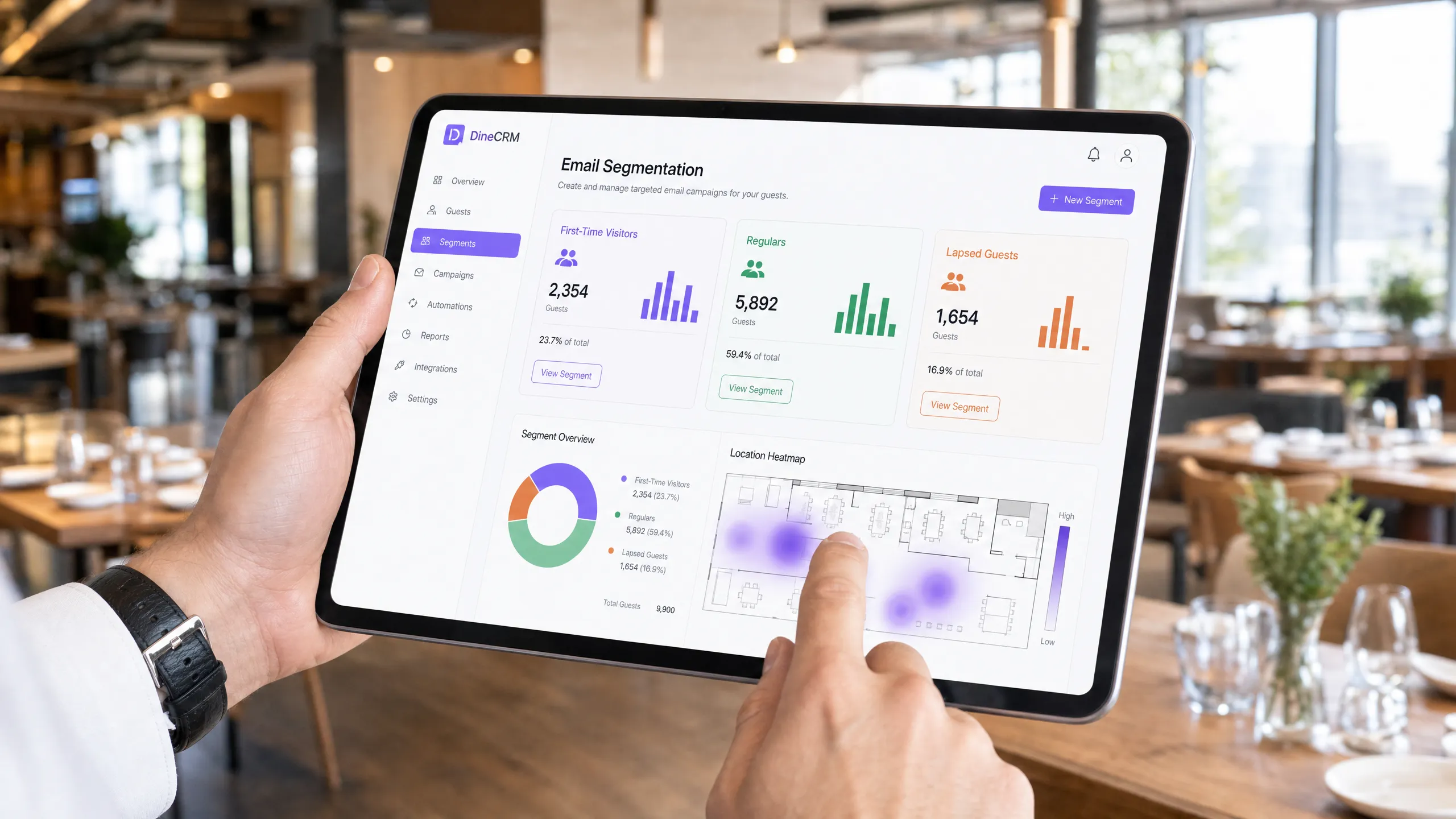
ठिकाणांसाठी ईमेल वर्गीकरण हे स्पष्ट करते की कशा प्रकारे प्रत्यक्ष ठिकाण ऑपरेटर - रेस्टॉरंट्स, हॉटेल्स, बार आणि किरकोळ विक्रेते - सामान्य ब्रॉडकास्ट ईमेल्सच्या पलीकडे जाऊन वास्तविक भेट देण्याच्या वर्तनावर आधारित लक्ष्यित मोहिमा राबवू शकतात. यातील फरक दाखवणारी मुख्य गोष्ट म्हणजे स्वतः ती यादी: अतिथी WiFi लॉगिनद्वारे एक प्रमाणित, GDPR-सुसंगत, फर्स्ट-पार्टी डेटा मालमत्ता तयार होते ज्याची प्रतिकृती Mailchimp आणि Klaviyo सारखी सामान्य टूल्स तयार करू शकत नाहीत. Purple Engage या वर्तणुकीच्या डेटाचा वापर अतिथींचे स्वयंचलितपणे वर्गीकरण करण्यासाठी आणि योग्य क्षणी योग्य ईमेल सक्रिय करण्यासाठी करते, ज्याचे श्रेय केवळ क्लिक-थ्रू दरांच्या ऐवजी प्रत्यक्ष रिटर्न भेटींशी जोडलेले असते.
तुमच्या व्हेन्यूसाठी हे का महत्त्वाचे आहे
बहुतेक व्हेन्यूचे ईमेल मार्केटिंग हे CRM च्या नावाखाली केले जाणारे ब्रॉडकास्ट मार्केटिंगच असते. तुम्ही एक लिस्ट एक्सपोर्ट करता, न्यूजलेटर लिहिता, सेंड दाबता आणि कोणीतरी टेबल बुक करेल किंवा पुन्हा येईल अशी आशा बाळगता. चांगल्या दिवसांत ओपन रेट्स २०% च्या आसपास असतात आणि ईमेल आणि प्रत्यक्ष येणाऱ्या लोकांची संख्या (footfall) यातील थेट संबंध कोणीही दाखवू शकत नाही. या पद्धतीचा तोटा केवळ वाया गेलेला बजेट हा नसून - यामुळे तुमची लिस्ट देखील खराब होते. निरुपयोगी ईमेल्स मिळणारे अतिथी अनसबस्क्राइब करतात आणि एकदा ते निघून गेले की ते कायमचे जातात.
ईमेल सेगमेंटेशन (Email segmentation) म्हणजे सामायिक वैशिष्ट्ये किंवा वर्तनाच्या आधारे तुमच्या संपर्क लिस्टचे वेगवेगळ्या गटांमध्ये वर्गीकरण करणे आणि नंतर प्रत्येक गटाला त्यांच्याशी संबंधित विशिष्ट संदेश पाठवणे होय. भौतिक व्हेन्यूसाठी, सर्वात महत्त्वाचे सेगमेंटेशन निकष लोकसंख्याशास्त्रीय नसून - ते वर्तनात्मक असतात. हा अतिथी किती वेळा भेट देतो? ते शेवटी कधी आले होते? ते सहसा किती वेळ थांबतात? हे संकेत तुम्हाला वय किंवा पिन कोडपेक्षा त्यांच्या उद्देशाबद्दल आणि निष्ठेबद्दल बरीच जास्त माहिती देतात.
याचा व्यावसायिक परिणाम मोजता येण्याजोगा आहे. सेगमेंटेड मोहिमांमुळे उच्च ओपन रेट्स, कमी अनसबस्क्राइब रेट्स आणि - व्हेन्यूसाठी सर्वात महत्त्वाचे म्हणजे - प्रत्यक्ष भेट देण्याच्या दरात वाढ होते. Purple Engage ईमेल पाठवण्याच्या क्रियेला थेट प्रत्यक्ष येणाऱ्या लोकांच्या संख्येशी जोडते, ज्यामुळे तुम्हाला केवळ क्लिक-थ्रू रेट ऐवजी प्रति सेंड मिळणारा महसूल पाहता येतो.
सेगमेंटेशन न करण्याचा तोटा काळानुरूप वाढत जातो. ज्या अतिथीला गरज नसताना डिस्काउंटची ऑफर मिळते, त्याला नेहमी डिस्काउंटची वाट पाहण्याची सवय लागते. बऱ्याच काळापासून न आलेल्या नियमित ग्राहकाला वैयक्तिकृत विन-बॅक संदेशाऐवजी सामान्य न्यूजलेटर मिळाले तर तो परत येत नाही. पहिल्यांदाच भेट देणाऱ्या व्यक्तीला त्यांच्या भेटीनंतर दोन आठवडे काहीच ऐकायला मिळाले नाही, तर ते तुमचे अस्तित्व सहज विसरून जातात.
दृष्टिकोन
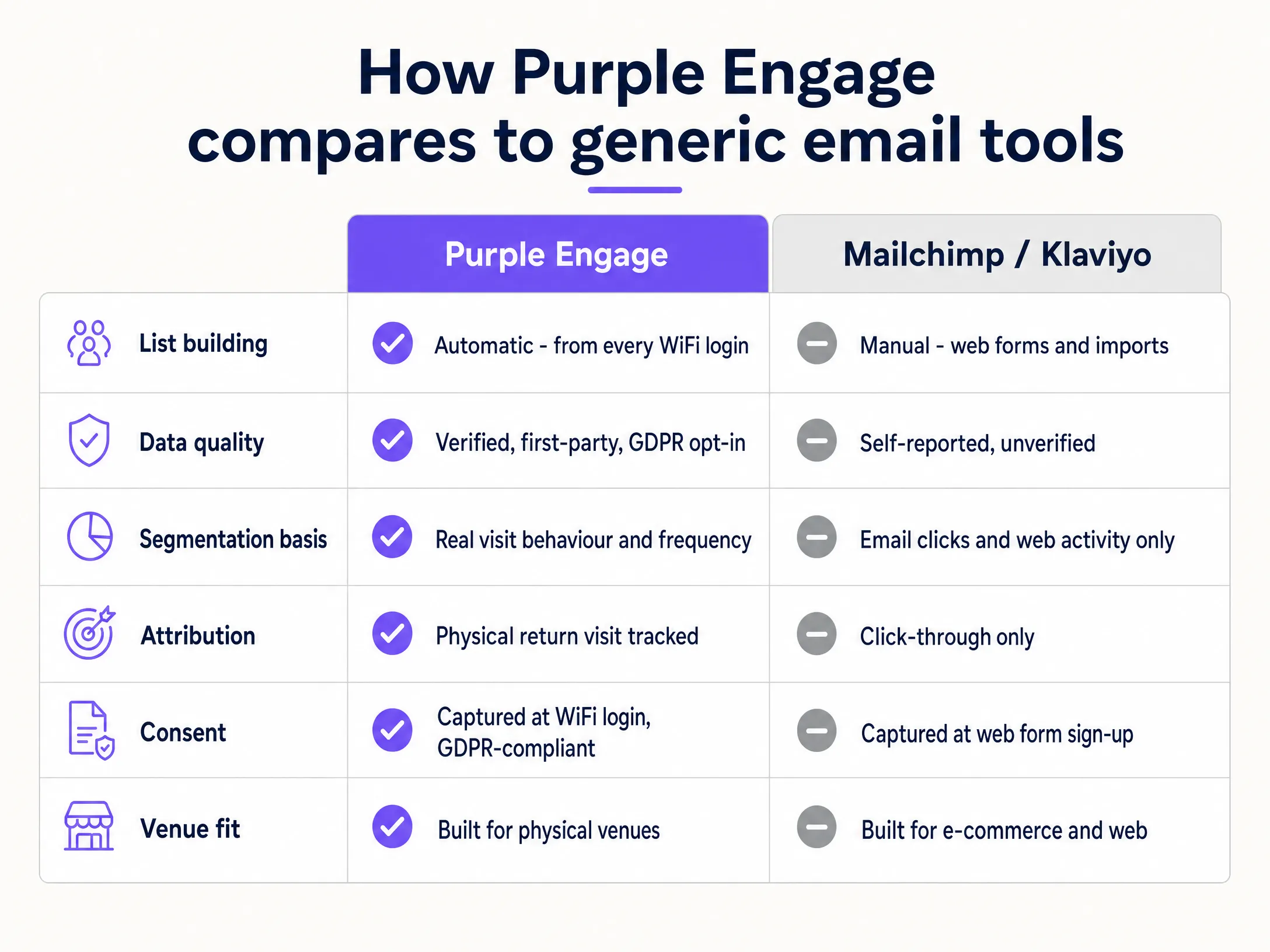
भौतिक व्हेन्यूसाठी वेगळेपण ठरवणारी गोष्ट ईमेल टूल नाही - तर ती लिस्ट आहे. Mailchimp, Klaviyo आणि HubSpot सारखे सामान्य ईमेल प्लॅटफॉर्म्स मोहिमा चालवण्यासाठी उत्कृष्ट आहेत, परंतु ते तुमच्यासाठी लिस्ट तयार करत नाहीत. ते वेब फॉर्म्स, मॅन्युअल इम्पोर्ट्स, बुकिंग सिस्टम एक्सपोर्ट्स आणि लॉयल्टी प्रोग्राम साइन-अप्सवर अवलंबून असतात. या पद्धती केवळ अशाच अतिथींची माहिती मिळवू शकतात जे डिजिटल चॅनेलद्वारे सक्रियपणे ऑप्ट-इन करण्यासाठी प्रेरित असतात. यामुळे तुम्ही तुमच्या बहुतांश ग्राहकांना गमावत आहात.
Guest WiFi यामध्ये बदल घडवून आणते. जेव्हा एखादा अतिथी तुमच्या WiFi शी कनेक्ट होतो, तेव्हा ते Captive Portal द्वारे ऑथेंटिकेट करतात - हे एक ब्रँडेड लॉगिन पेज असते जे स्पष्ट अटी आणि मार्केटिंग संवादांसाठी GDPR-सुसंगत ऑप्ट-इन सादर करते. अतिथी त्यांचा ईमेल पत्ता शेअर करण्याचा जाणीवपूर्वक निर्णय घेतात. हा फर्स्ट-पार्टी डेटा आहे: जो सत्यापित, संमती असलेला आणि थेट एखाद्या विशिष्ट तारखेला आणि वेळेला दिलेल्या प्रत्यक्ष भेटीशी जोडलेला असतो. GDPR ची अशी आवश्यकता आहे की मार्केटिंगसाठी दिलेली संमती ही स्वेच्छेने, विशिष्ट हेतूसाठी, माहितीपूर्ण आणि स्पष्ट असावी. आधीच टिक केलेले चेकबॉक्स या मानकाची पूर्तता करत नाही. नियम आणि अटींचा मोघम संदर्भ देणे देखील या मानकात बसत नाही. Captive Portal चा दृष्टिकोन योग्यरित्या कॉन्फिगर केल्यास, प्रत्यक्ष भौतिक संवादाच्या वेळी दस्तऐवजीकरण केलेली संमती कॅप्चर करतो - जी बहुतांश वेब फॉर्म साइन-अप्सपेक्षा अधिक मजबूत संमतीची नोंद असते. Purple ने 2024 मध्ये 80,000+ पेक्षा जास्त लाइव्ह स्थळांवर आणि 440 दशलक्ष लॉगइनवर काम केले आहे (Purple अंतर्गत डेटा), आणि GDPR-सुसंगत संमती कॅप्चर करणे हे या प्लॅटफॉर्ममध्ये डीफॉल्टनुसार अंगभूत आहे.
WiFi-आधारित दृष्टिकोनाचा दुसरा फायदा म्हणजे ईमेल पत्त्यासह मिळणारा वर्तनात्मक डेटा. प्रत्येक लॉगिन त्या पाहुण्याच्या भेटीची तारीख, वेळ, थांबलेला वेळ (dwell time) आणि भेटीची वारंवारता नोंदवतो. या डेटासाठी पाहुण्याला कोणताही सर्व्हे भरण्याची किंवा प्रोफाइल अपडेट करण्याची आवश्यकता नसते. तो केवळ भेटीच्या कृतीतून आपोआप तयार होतो. हा वर्तनात्मक रेकॉर्ड म्हणजेच ईमेल सूचीच्या वर्गीकरणासाठी (email list segmentation) लागणारा कच्चा माल आहे जो पाहुणे तुमच्या स्थळाशी नेमका कसा संवाद साधतात हे दर्शवतो.
तुमच्या अतिथी WiFi सह हे कसे करावे
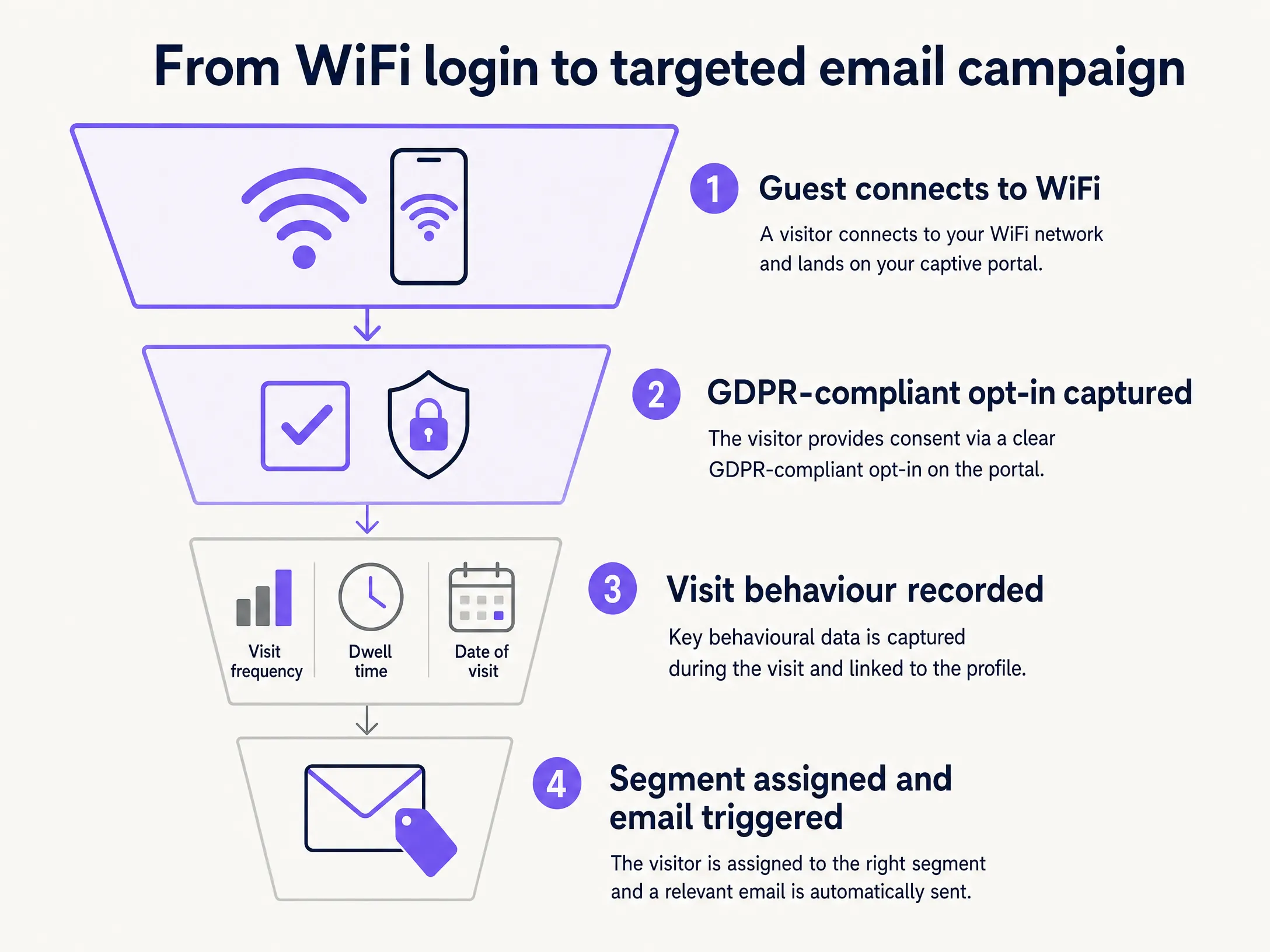
Purple Engage डेटा कॅप्चर करतो आणि मोहीम मूळ स्वरूपात चालवतो. या वर्कफ्लोचे चार टप्पे आहेत.
टप्पा 1: कॅप्चर. पाहुणे तुमच्या WiFi शी कनेक्ट होतात. Captive Portal त्यांचा ईमेल पत्ता आणि GDPR-सुसंगत मार्केटिंग ऑप्ट-इन गोळा करतो. Purple पाहुण्यांचे प्रोफाइल तयार करतो आणि भेटीची वेळ, थांबलेला वेळ आणि ठिकाण नोंदवतो.
टप्पा 2: समृद्ध करणे (Enrich). प्रत्येक त्यानंतरच्या भेटीमुळे प्रोफाइल अपडेट होते. भेटीची वारंवारता, अलीकडील भेट आणि सरासरी थांबलेला वेळ स्वयंचलितपणे जमा होतो. कोणतीही मॅन्युअल डेटा एंट्री आवश्यक नाही. सुरू करण्यासाठी कोणत्याही इंटिग्रेशनची गरज नाही, तरीही जर तुम्हाला अस्तित्वात असलेल्या टूलमध्ये वर्गीकरण पुश करायचे असेल तर Purple Engage हे मूळ इंटिग्रेशन्सद्वारे Salesforce, HubSpot, Klaviyo आणि Mailchimp शी कनेक्ट होते.
टप्पा 3: वर्गीकरण (Segment). तुम्ही व्हिज्युअल नियम बिल्डरचा वापर करून Purple Engage मध्ये वर्गीकरणाचे निकष परिभाषित करता. हे वर्गीकरण असे असू शकते: "गेल्या 30 दिवसांत एकदा भेट दिली" किंवा "गेल्या 30 दिवसांत 3 किंवा अधिक वेळा भेट दिली" किंवा "शेवटची भेट 60 दिवसांपेक्षा अधिक काळापूर्वी झाली होती आणि आधी किमान 3 वेळा भेट दिली होती." प्लॅटफॉर्म पाहुण्यांना डायनॅमिकली वर्गात समाविष्ट करतो. जेव्हा पाहुण्याचे वर्तन बदलते, तेव्हा त्यांचे वर्गीकरण स्वयंचलितपणे अपडेट होते.
टप्पा 4: उपयोजन (Deploy). जेव्हा एखादा पाहुणा एखाद्या विशिष्ट वर्गात प्रवेश करतो तेव्हा स्वयंचलित मोहिमा सुरू होतात. पहिल्यांदा भेट देणाऱ्याला पहिला लॉगिन झाल्यानंतर 24 तासांनी ईमेल पाठवला जातो. एखादा नियमित पाहुणा 60-दिवसांच्या निष्क्रियतेचा टप्पा ओलांडतो तेव्हा त्याला पुन्हा आकर्षित करणारा (win-back) ईमेल पाठवला जातो. तुम्ही नियम एकदा सेट करता आणि प्लॅटफॉर्म सतत या मोहिमा चालवत राहतो.
ज्या ठिकाणांवर आधीपासूनच Mailchimp किंवा Klaviyo वापरले जात आहे, त्यांच्यासाठी Purple Engage त्या टूल्समध्ये सेगमेंट सदस्यत्व पुश करू शकते. तुम्ही तुमचे सध्याचे ईमेल टेम्पलेट्स आणि पाठवणारी पायाभूत सुविधा तशीच ठेवू शकता आणि त्यावर वर्तनात्मक वर्गीकरणाचा स्तर जोडू शकता. WiFi लॉगिनवरून ही सूची स्वयंचलितपणे तयार होते; आणि मोहीम तुमच्या सध्याच्या टूलवरून पाठवली जाते.
काय पाठवावे आणि कधी पाठवावे
बहुतांश ठिकाणांसाठी (venues) तीन विभाग हे एकूण मूल्याचा सर्वात मोठा हिस्सा कव्हर करतात. हे आधी तयार करा, ३० दिवस मोजमाप करा, आणि नंतर अधिक क्लिष्ट पर्याय जोडा.
विभाग १: पहिल्यांदा येणारे अभ्यागत. निकष: एक WiFi लॉगिन, आधी कधीही भेट न दिलेली. वेळ: पहिल्या भेटीनंतर २४ तासांनी ईमेल ट्रिगर होतो. मजकूर: एक प्रेमाचे स्वागत, तुमच्या ठिकाणी पुन्हा का भेट दिली पाहिजे याची थोडक्यात आठवण, आणि १४ दिवसांच्या आत परत येण्यासाठी एक स्पष्ट प्रोत्साहन - जसे की एक कॉम्प्लिमेंटरी वस्तू, टक्केवारीतील सूट, किंवा आगामी कार्यक्रमाचे आमंत्रण. १४ दिवसांचा हा कालावधी महत्त्वाचा आहे. हॉस्पिटॅलिटी क्षेत्रातील लॉयल्टीवरील संशोधन सातत्याने दर्शवते की पुन्हा संपर्क न साधल्यास दोन आठवड्यांनंतर दुसऱ्या भेटीची शक्यता झपाट्याने कमी होते. हे ऑटोमेशन ही बहुतांश ठिकाणे चालवू शकत असलेली सर्वात जास्त परतावा देणारी मोहीम आहे.
विभाग २: नियमित ग्राहक. निकष: गेल्या ३० दिवसांत तीन किंवा अधिक भेटी. वेळ: मासिक, किंवा नवीन मेनू लाँच किंवा खाजगी कार्यक्रमाचे आमंत्रण यांसारख्या विशिष्ट प्रसंगाने ट्रिगर झालेली. मजकूर: विशेष प्रवेश, लवकर मिळणारी माहिती, विशेष ओळख. या ग्रुपला डिस्काउंट मोहिमा पाठवू नका. डिस्काउंटवर आधारित ईमेल तुमच्या सर्वात निष्ठावान ग्राहकांना भेट देण्यापूर्वी ऑफरची वाट पाहण्याची सवय लावतात. त्याऐवजी, त्यांना इनसायडरसारखे वागवा. Premier Inn आणि Whitbread त्यांच्या सर्वाधिक वारंवार येणाऱ्या ग्राहकांना किमतीत कपातीची अपेक्षा न ठेवता त्यांच्याशी संपर्क टिकवून ठेवण्यासाठी लॉयल्टीशी संबंधित संवादांचा वापर करतात.
विभाग ३: बंद पडलेले नियमित ग्राहक (Lapsed regulars). निकष: पूर्वी तीन किंवा अधिक वेळा भेट दिली आहे, गेल्या ६० दिवसांत कोणतीही भेट नाही. वेळ: जेव्हा ६० दिवसांची मर्यादा ओलांडली जाते तेव्हा ईमेल ट्रिगर होतो. मजकूर: कोणत्याही अपराधीपणाशिवाय या अंतराची जाणीव ठेवा. काहीतरी नवीन घेऊन सुरुवात करा - जसे की हंगामी मेनू, नूतनीकरण, किंवा नवीन कार्यक्रमांची मालिका. यामध्ये एक भक्कम प्रोत्साहन समाविष्ट करा. ध्येय हे आहे की बंद पडलेल्या नियमित ग्राहकाला केवळ "आम्ही तुम्हाला मिस करत आहोत" असा सामान्य संदेश देण्याऐवजी परत येण्यासाठी एक विशिष्ट आणि योग्य वेळ असलेले कारण दिले जावे.
तुमचा डेटा जसा परिपक्व होईल, तसे या तीन विभागांच्या पलीकडे खालील अतिरिक्त विभागांचा विचार करा:
| विभाग | निकष | मोहिमेचा प्रकार |
|---|---|---|
| आठवड्याच्या ठराविक दिवशी येणारे निष्ठावान | सातत्याने त्याच दिवशी भेट देतात | विशिष्ट दिवसाच्या ऑफर किंवा कार्यक्रमांची आमंत्रणे |
| जास्त वेळ थांबणारे | सरासरी थांबण्याचा वेळ ९० मिनिटांपेक्षा जास्त | लॉयल्टी प्रोग्राम नोंदणी, अपसेल (upsell) |
| एकापेक्षा जास्त ठिकाणी भेट देणारे | तुमच्या दोन किंवा अधिक ठिकाणांवर लॉगिन | विविध ठिकाणांमधील मोहिमा, ब्रँड लॉयल्टी |
| परिसरासाठी नवीन | पहिली भेट, डिव्हाइसचे लोकेशन हे स्थानिक नसलेले दर्शवते | "येणे सार्थकी लावणारा" मजकूर, हंगामी कार्यक्रम |
| विशिष्ट कार्यक्रमांमुळे येणारे | विशिष्ट तारखांच्या आसपास भेटींमध्ये होणारी वाढ | कार्यक्रमानंतरचा फॉलो-अप, पुढील कार्यक्रमाची पूर्वझलक |
रेस्टॉरंट्स आणि बारसारख्या हॉस्पिटॅलिटी ठिकाणांसाठी, संपूर्ण प्लॅटफॉर्मवरील Purple Engage च्या ग्राहक डेटावर आधारित, लाँच झाल्यापासून ९० दिवसांच्या आत केवळ पहिल्यांदा येणारे अभ्यागत आणि बंद पडलेले नियमित ग्राहक यांच्या ऑटोमेशन मोहिमांमुळे परत येणाऱ्या भेटींच्या दरात १५-२५% वाढ होऊ शकते.
काय प्रभावी ठरते आहे याचे मोजमाप करणे
ओपन रेट (Open rate) हा ठिकाणांच्या मार्केटिंगसाठी केवळ नावापुरता असणारा मॅट्रिक आहे. जर त्या ओपन करणाऱ्यांपैकी कोणीही पुन्हा दारातून आत पाऊल ठेवले नसेल, तर ३०% ओपन रेटला काहीही अर्थ नाही. जो मॅट्रिक खरोखर महत्त्वाचा आहे तो म्हणजे रिटर्न व्हिजिट रेट (return visit rate) - मोहीम मिळाल्यानंतर एका ठरवलेल्या कालावधीत शारीरिकरित्या त्या ठिकाणी परत येणाऱ्या ईमेल प्राप्तकर्त्यांची टक्केवारी.Purple Engage थेट याचे मोजमाप करते. हे प्लॅटफॉर्म WiFi लॉगिन ट्रॅक करत असल्याने, एखादा अतिथी ज्याला ईमेल मिळाला होता त्याने तो ईमेल पाठवल्यापासून सात, १४ किंवा ३० दिवसांच्या आत त्या ठिकाणी येऊन प्रमाणीकरण केले आहे की नाही हे ते ओळखू शकते. हे क्लोज्ड-लूप अट्रिब्यूशन तुमच्या ईमेल मार्केटिंगवरील खर्चाला इनबॉक्स एंगेजमेंटऐवजी पाऊलखुणा (footfall) आणि महसुलाशी जोडते.
महत्त्वानुसार ट्रॅक करण्याचे मेट्रिक्स खालीलप्रमाणे आहेत:
१. प्रति विभाग रिटर्न व्हिजिट रेट (Return visit rate per segment): कोणते विभाग प्रत्यक्ष परत येण्याचा सर्वोच्च दर निर्माण करतात? हे तुम्हाला सांगते की तुमचे ईमेल मार्केटिंग नेमके कुठे काम करत आहे. २. प्रति पाठवणी महसूल (Revenue per send): तुमची POS प्रणाली Purple Engage सोबत एकत्रित केल्यास, तुम्ही परत येणाऱ्या अतिथीचा सरासरी खर्च मोजू शकता आणि त्याचे श्रेय मोहिमेला देऊ शकता. POS एकत्रीकरणाशिवाय देखील, तुम्ही सरासरी व्यवहार मूल्यांवरून याचा अंदाज लावू शकता. ३. विभाग वाढीचा दर (Segment growth rate): तुमचा पहिल्यांदा भेट देणाऱ्यांचा विभाग वाढत आहे का? नसल्यास, तुमच्या पाऊलखुणा मिळवण्यामध्ये (footfall acquisition) समस्या असू शकते, तुमच्या ईमेल मार्केटिंगमध्ये नाही. ४. लॅप्स झालेला दर (Lapsed rate): तुमच्या नियमित ग्राहकांच्या विभागातील किती टक्के लोक दरमहा लॅप्स झालेल्या विभागात जात आहेत? वाढणारा लॅप्स दर हा रिटेंशनमधील समस्येचा संकेत देतो जो केवळ ईमेलद्वारे सोडवला जाऊ शकत नाही. ५. विभागानुसार अनसबस्क्राइब दर (Unsubscribe rate by segment): विशिष्ट विभागातील उच्च अनसबस्क्राइब दर हा सुसंगततेचा संकेत आहे. त्या गटासाठी सामग्री किंवा वारंवारता चुकीची आहे.
ओपन रेट आणि क्लिक-थ्रू रेट हे दुय्यम आहेत. ईमेल सामग्रीची गुणवत्ता ओळखण्यासाठी ते उपयुक्त आहेत, परंतु ते तुम्ही ऑप्टिमाइझ करत असलेले अंतिम परिणाम नाहीत.
कुठे सुरुवात करावी
दोन आठवड्यांच्या आत तुमची पहिली विभागलेली मोहीम थेट सुरू करण्यासाठी ही क्रमबद्ध चेकलिस्ट आहे.
१. तुमच्या captive portal चे ऑडिट करा: तुमच्या WiFi लॉगिन प्रक्रियेमध्ये स्पष्ट, दृश्यमान GDPR-सुसंगत मार्केटिंग ऑप्ट-इन चेकबॉक्स समाविष्ट असल्याची खात्री करा. तसे नसल्यास, ही सर्वात पहिली दुरुस्ती आहे. २. तुमच्या विद्यमान सूचीची तपासणी करा: तुमच्याकडे किती ऑप्ट-इन केलेले संपर्क आहेत? तुमच्याकडे प्रत्येकाबद्दल कोणता डेटा आहे? त्रुटी ओळखा - विशेषतः तुमच्याकडे भेट देण्याची वारंवारता आणि अलीकडील डेटा आहे की नाही. ३. तुमचे तीन मुख्य विभाग स्पष्ट करा: पहिल्यांदा भेट देणारे, नियमित आणि लॅप्स झालेले नियमित. प्लॅटफॉर्ममध्ये तयार करण्यापूर्वी निकष सोप्या भाषेत लिहा. ४. पहिल्यांदा भेट देणाऱ्यांचे ऑटोमेशन तयार करा: पहिल्या WiFi लॉगिननंतर २४ तासांनी ट्रिगर सेट करा. ईमेल लिहा. तो लहान ठेवा - तीन वाक्ये, एक ऑफर, एक कॉल टू ॲक्शन. ५. तुमची अट्रिब्यूशन विंडो सेट करा: तुम्ही परत येणाऱ्या भेटींचे मोजमाप सात दिवसांवर करणार की १४ दिवसांवर हे ठरवा. सुसंगत रहा जेणेकरून तुम्ही काळानुसार परिणामांची तुलना करू शकाल. ६. जटिलता वाढवण्यापूर्वी ३० दिवस चालवा: ताबडतोब १० विभाग तयार करण्याचा मोह टाळा. पहिले ऑटोमेशन चालू द्या, रिटर्न व्हिजिट रेट मोजा आणि विस्तार करण्यापूर्वी त्या बेसलाइनचा वापर करा.
WiFi वरून तुमची ईमेल सूची तयार करण्याबद्दल अधिक माहितीसाठी, आमचे मार्गदर्शक पहा: How to build an email list from your WiFi (without buying one). आदरातिथ्य-विशिष्ट (hospitality-specific) वापरासाठी, Email marketing for restaurants: a practical guide पहा.