
SMS और ईमेल: वेन्यू के लिए मल्टी-चैनल अभियान
यह गाइड बताता है कि भौतिक वेन्यू के लिए SMS और ईमेल को एक एकल, स्वचालित अभियान रणनीति में कैसे व्यवस्थित किया जाए। इसमें प्रत्येक चैनल की विशिष्ट भूमिका, Guest WiFi के माध्यम से एक एकीकृत संपर्क सूची बनाने का तरीका, और बार-बार होने वाले दौरों और मापने योग्य राजस्व को बढ़ावा देने के व्यावहारिक कदम शामिल हैं।
यह आपके स्थान के लिए क्यों महत्वपूर्ण है
लोग आपके परिसर में आते हैं, पैसे खर्च करते हैं, और चले जाते हैं। जब तक वे आपको अपना विवरण न दें, तब तक आपके पास उनसे दोबारा संपर्क करने का कोई तरीका नहीं होता है। उन विवरणों को कैप्चर करने का व्यावसायिक लाभ बिल्कुल स्पष्ट है। एक अतिथि जो दो बार आता है, वह एक बार आने वाले अतिथि की तुलना में अपने जीवनकाल में लगभग 67% अधिक खर्च करता है। एक बार आने वाले और एक वफादार नियमित ग्राहक के बीच का अंतर लगभग हमेशा संचार होता है। आपको उन तक पहुँचने का एक माध्यम चाहिए, और ऐसा करने के लिए उनकी अनुमति की आवश्यकता होती है।
कई स्थान बुकिंग सिस्टम के माध्यम से ईमेल पते या टेबल वेटलिस्ट ऐप्स के माध्यम से SMS नंबर एकत्र करके ऐसा करने का प्रयास करते हैं। इससे बिखरी हुई सूचियाँ बन जाती हैं। आपके पास ईमेल के लिए एक अलग दर्शक वर्ग और SMS के लिए एक अलग दर्शक वर्ग बन जाता है, जिनकी सहमति अलग-अलग सिस्टम में दर्ज होती है। जब कोई अभियान चलाया जाता है, तो वह केवल एक ही चैनल पर जाता है, दोनों पर नहीं।
यह गाइड इस बिखराव को ठीक करने के तरीके के बारे में बताती है। हम देखेंगे कि SMS और ईमेल का प्रदर्शन अलग-अलग क्यों होता है, प्रत्येक चैनल का उपयोग कब करना चाहिए, और अपने गेस्ट WiFi से स्वचालित रूप से बनाई गई एकल सहमति-प्राप्त संपर्क रिकॉर्ड से दोनों चैनलों को कैसे संचालित किया जाए।
दृष्टिकोण: संदेश के अनुसार सही चैनल चुनना
आइए संख्याओं से शुरू करते हैं, क्योंकि वे आपको सब कुछ बताती हैं कि किस चैनल का उपयोग कब और कैसे करना है।
SMS की ओपन रेट 98% है। विशेष रूप से रेस्तरां के लिए, ईमेल का औसत लगभग 43% है। यह भी एक मजबूत संख्या है, लेकिन SMS पूरी तरह से एक अलग श्रेणी में है। नब्बे प्रतिशत टेक्स्ट संदेश मिलने के तीन मिनट के भीतर पढ़ लिए जाते हैं। ईमेल आमतौर पर एक घंटे के भीतर पढ़ा जाता है, यदि वह उस दिन पढ़ा भी जाता है।
व्यवहार में इसका क्या अर्थ है? SMS तात्कालिकता के लिए है। ईमेल गहराई के लिए है।
यदि आपको एक शांत मंगलवार की शाम को 40 टेबल भरनी हैं, तो शाम 4 बजे भेजा गया एक SMS जिसमें लिखा हो "आज रात 2 लोगों के लिए टेबल - अगले एक घंटे में बुक करने पर 20% की छूट" बुकिंग को बढ़ावा देगा। इसी समय पर भेजे गए इसी संदेश वाले ईमेल को ज्यादातर लोग कल सुबह पढ़ेंगे, जब बहुत देर हो चुकी होगी।
दूसरी ओर, यदि आप अपने मेहमानों को एक नए मौसमी मेनू के बारे में बताना चाहते हैं, एक वफादारी कार्यक्रम पेश करना चाहते हैं, या समीक्षा के अनुरोध के साथ यात्रा के बाद धन्यवाद भेजना चाहते हैं, तो ईमेल आपको इसे ठीक से करने के लिए स्थान देता है। आप छवियाँ शामिल कर सकते हैं, एक कहानी बता सकते हैं, और कई कॉल-टू-एक्शन शामिल कर सकते हैं। SMS ऐसा नहीं कर सकता।
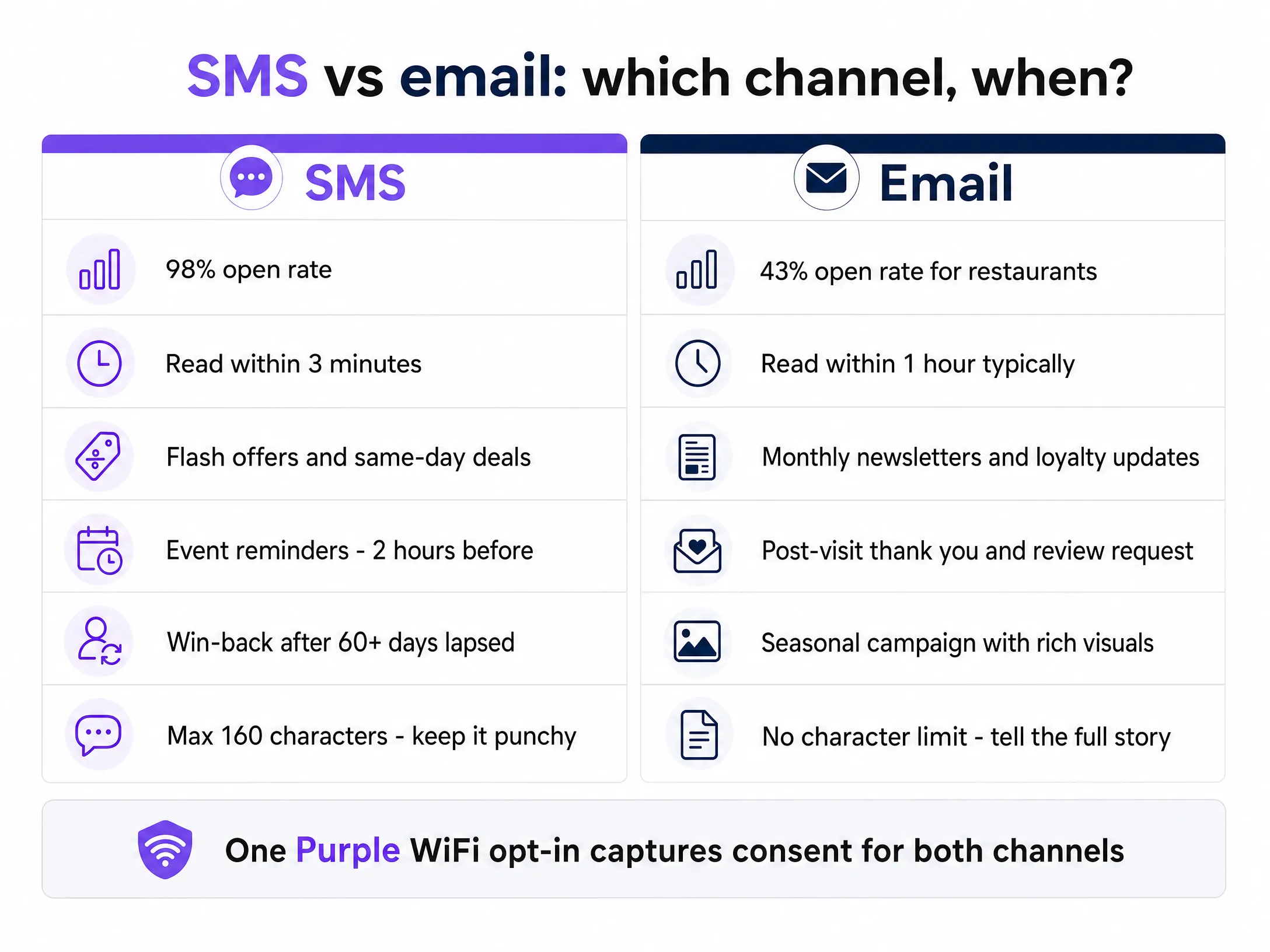
तो निर्णय लेने का ढांचा सरल है। अपने आप से दो प्रश्न पूछें। पहला: क्या इस संदेश को आज, या अगले कुछ घंटों में कार्रवाई शुरू करने की आवश्यकता है? यदि हाँ, तो SMS का उपयोग करें। दूसरा: क्या इस संदेश को संदर्भ, विजुअल्स या लंबी कहानी से लाभ होता है? यदि हाँ, तो ईमेल का उपयोग करें।
एक तीसरा विचार भी है, जो लागत है। ईमेल की तुलना में प्रति संदेश भेजने में SMS की लागत अधिक होती है। यह इससे बचने का कोई कारण नहीं है - निवेश पर रिटर्न अच्छी तरह से प्रलेखित है, कुछ बेंचमार्क दिखाते हैं कि SMS पर खर्च किए गए प्रत्येक £1 के लिए £21 और £41 के बीच रिटर्न मिलता है। लेकिन इसका मतलब यह है कि आपको विचारशील होना चाहिए। SMS को उच्च-मूल्य वाले क्षणों के लिए आरक्षित रखें: उसी दिन के ऑफ़र, दो घंटे पहले भेजे गए इवेंट रिमाइंडर, उन मेहमानों को वापस जीतने वाले संदेश जिन्होंने 60 दिनों या उससे अधिक समय से विज़िट नहीं किया है।
इसे अपने अतिथि WiFi के साथ कैसे करें
सबसे समझदारी भरा तरीका यह है कि मेहमान द्वारा पहली बार आपसे जुड़ने के क्षण से ही दोनों चैनलों के लिए सहमति दर्ज करके एक संपर्क रिकॉर्ड बनाया जाए। इस तरह, आप व्यवस्थित कर सकते हैं। आप किसी नए इवेंट की घोषणा करने के लिए सोमवार को एक ईमेल भेज सकते हैं, और फिर शनिवार को इवेंट से दो घंटे पहले एक SMS रिमाइंडर भेज सकते हैं।
Omnisend के शोध से पता चला है कि जो ब्रांड अपनी मल्टी-चैनल रणनीति में SMS को एकीकृत करते हैं, वे सिंगल-चैनल दृष्टिकोणों की तुलना में ग्राहक जुड़ाव में 47.7% की वृद्धि देखते हैं। Attentive का डेटा दिखाता है कि जिन सब्सक्राइबर्स को SMS और ईमेल दोनों मिलते हैं, उनके खरीदारी करने की संभावना केवल SMS प्राप्त करने वालों की तुलना में 2.4 गुना अधिक होती है।
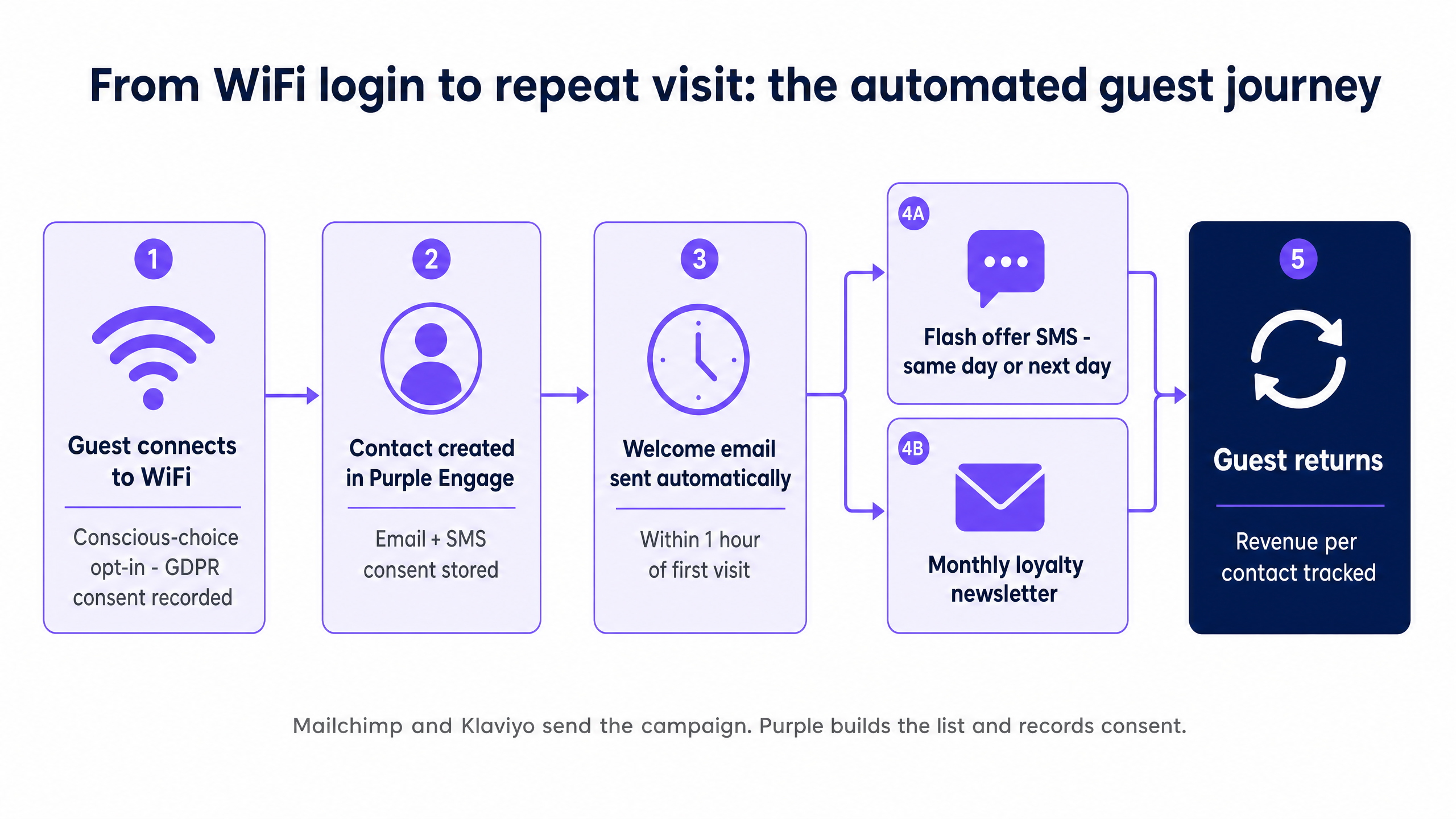
वह तंत्र जो इसे बड़े पैमाने पर काम करने योग्य बनाता है वह है Guest WiFi। जब कोई मेहमान आपके WiFi से जुड़ता है, तो वे एक captive portal लॉगिन से गुजरते हैं। वह लॉगिन एक सचेत-विकल्प ऑप्ट-इन है - मेहमान सक्रिय रूप से अपने विवरण प्रदान करना और आपकी मार्केटिंग शर्तों से सहमत होना चुनता है। GDPR के तहत, यह ईमेल और SMS दोनों के लिए वैध सहमति है, बशर्ते आपकी सहमति की भाषा दोनों चैनलों के बारे में स्पष्ट और विशिष्ट हो।
यह वह हिस्सा है जो सामान्य ईमेल टूल आपके लिए नहीं कर सकते हैं। वे अभियान भेजने में उत्कृष्ट हैं। वे आपकी सूची बनाने के व्यवसाय में नहीं हैं। वे उन संपर्कों को प्राप्त करते हैं जिन्हें आप उन्हें भेजते हैं। इन सीमाओं पर अधिक संदर्भ के लिए, Mailchimp for hotels: where it falls short for venues (स्पैनिश में भी उपलब्ध: Mailchimp para hoteles: en qué se queda corto para los establecimientos) पर हमारी मार्गदर्शिका पढ़ें।
Purple Engage सीधे WiFi लॉगिन से संपर्क सूची बनाता है, सहमति दर्ज करता है, और उन संपर्कों को ईमेल और SMS दोनों अभियानों के लिए उपलब्ध कराता है - सब कुछ एक ही ऑप्ट-इन क्षण से। 2024 में 80,000 से अधिक लाइव वेन्यू और 440 मिलियन लॉगिन में, यह हर दिन कैप्चर और सक्रिय किए जा रहे सत्यापित, फ़र्स्ट-पार्टी डेटा की एक महत्वपूर्ण मात्रा है।
क्या भेजें, और कब
आइए व्यावहारिक बनें। इसे सेटअप करने के चरण यहाँ दिए गए हैं।
चरण एक: सहमति को सही तरीके से कैप्चर करें। ईमेल पते और मोबाइल नंबर दोनों को कैप्चर करने के लिए अपने WiFi लॉगिन पोर्टल को कॉन्फ़िगर करें, जिसमें ईमेल मार्केटिंग और SMS मार्केटिंग के लिए स्पष्ट अलग-अलग सहमति चेकबॉक्स हों। उन्हें एक ही चेकबॉक्स में बंडल न करें - GDPR के लिए विस्तृत सहमति की आवश्यकता होती है, और बंडल की गई सहमति मान्य सहमति नहीं है।
चरण दो: अपना स्वागत ऑटोमेशन सेटअप करें। जैसे ही कोई अतिथि पहली बार लॉग इन करता है, एक स्वचालित स्वागत ईमेल ट्रिगर करें। इसे छोटा रखें। आने के लिए उन्हें धन्यवाद दें, उन्हें बताएं कि आपके कम्युनिकेशंस से क्या उम्मीद की जाए, और एक स्पष्ट कॉल टू एक्शन शामिल करें - शायद आपके लॉयल्टी प्रोग्राम का लिंक या उनकी अगली विज़िट के लिए एक छोटा प्रोत्साहन।
चरण तीन: अपना सेगमेंटेशन तैयार करें। कम से कम, विज़िट की आवृत्ति के आधार पर सेगमेंट करें। जिन अतिथियों ने पिछले 90 दिनों में एक बार विज़िट किया है, वे री-एंगेजमेंट कैंपेन के लिए उम्मीदवार हैं। जो अतिथि नियमित रूप से आते हैं वे आपके लॉयल्टी दर्शक हैं और उन्हें अलग मैसेजिंग मिलनी चाहिए। जिन अतिथियों ने 60 दिनों या उससे अधिक समय से विज़िट नहीं किया है, वे आपके विन-बैक सेगमेंट हैं।
चरण चार: अपने चैनल को अपने मैसेज प्रकार से मैप करें। हमारे द्वारा चर्चा किए गए फ्रेमवर्क का उपयोग करें। समय-संवेदनशील, उच्च-तत्कालिकता वाले मैसेज SMS द्वारा भेजे जाते हैं। न्यूज़लेटर, लॉयल्टी अपडेट, मौसमी कैंपेन और विज़िट के बाद के फ़ॉलो-अप ईमेल द्वारा भेजे जाते हैं।
क्या काम करता है इसे मापना
ओपन रेट और क्लिक रेट उपयोगी संकेतक हैं, लेकिन जो मीट्रिक आपको बताती है कि आपका प्रोग्राम काम कर रहा है या नहीं, वह रिटर्न विज़िट रेट है। कैंपेन प्राप्त करने वाले कितने अतिथि 30 दिनों के भीतर वापस आए? आपके SMS और ईमेल कैंपेन को मिलाकर प्रति सेंड रेवेन्यू क्या है? ये वे संख्याएं हैं जिन्हें ट्रैक किया जाना चाहिए।
SMS द्वारा अत्यधिक मैसेज भेजने की सामान्य गलती से बचें। अधिकांश वेन्यू के लिए प्रति माह एक या दो SMS मैसेज सही फ्रीक्वेंसी है। इससे अधिक होने पर, आप अनसब्सक्राइब दरों को बढ़ते हुए देखेंगे। Fabio Viviani Hospitality, एक 35-लोकेशन वाला रेस्टोरेंट ग्रुप, ने पाया कि साप्ताहिक के बजाय पाक्षिक SMS भेजने से अनसब्सक्राइबर्स तुरंत गिर गए, जबकि छह महीनों में प्रति सेंड रेवेन्यू बढ़कर $440,000 हो गया।
एक ही दिन में SMS और ईमेल दोनों द्वारा एक ही मैसेज न भेजें। प्रत्येक चैनल को कुछ ऐसा जोड़ना चाहिए जो दूसरा नहीं करता है। यदि आप सोमवार को एक नए मेनू की घोषणा करते हुए एक ईमेल भेजते हैं, और फिर गुरुवार को एक विशिष्ट डिश हाइलाइट और बुकिंग लिंक के साथ एक SMS भेजते हैं, तो यह एक समन्वित अनुक्रम है। यदि आप एक ही मैसेज दो बार भेजते हैं, तो वह स्पैम है।
अंत में, सहमति स्वच्छता बनाए रखें। आपके सहमति रिकॉर्ड सटीक और अपडेटेड होने चाहिए। यदि कोई अतिथि SMS से ऑप्ट-आउट करता है, तो उस प्राथमिकता का तुरंत सम्मान किया जाना चाहिए और इसका उनके ईमेल सब्सक्रिप्शन पर कोई प्रभाव नहीं पड़ना चाहिए। Purple Engage इसे कांटेक्ट लेवल पर मैनेज करता है, इसलिए एक चैनल पर ऑप्ट-आउट गलती से दूसरे को बंद नहीं करता है।
कहाँ से शुरू करें
- अपनी वर्तमान कांटेक्ट लिस्ट का ऑडिट करें - उन कांटेक्ट्स में से कितने के पास SMS सहमति दर्ज है?
- अपने वर्तमान कैंपेन को SMS बनाम ईमेल निर्णय फ्रेमवर्क से मैप करें।
- स्पष्ट सहमति के साथ ईमेल और मोबाइल नंबर दोनों को कैप्चर करने के लिए अपने अतिथि WiFi Captive Portal को कॉन्फ़िगर करें।
- पहली बार लॉगिन करने वालों के लिए एक स्वागत योग्य ऑटोमेशन ईमेल सेटअप करें।
- अपने पहले समन्वित अभियान की योजना बनाएं: एक ईमेल घोषणा और उसके कुछ दिनों बाद एक लक्षित SMS रिमाइंडर।