
स्थानों के लिए विन-बैक अभियान: निष्क्रिय मेहमानों को वापस कैसे लाएं
यह गाइड स्थान संचालकों और मार्केटिंग प्रबंधकों को दिखाती है कि कैसे स्वचालित विन-बैक ईमेल अभियान बनाए जाएं जो उन मेहमानों को लक्षित करते हैं जिन्होंने 30, 60, या 90 दिनों में दौरा नहीं किया है। इसमें तीन-चरणीय अनुक्रम, विषय पंक्ति रणनीति, और ऑफर मैकेनिक्स शामिल हैं जो रेस्तरां, बार, होटल और रिटेल के लिए काम करते हैं। मुख्य तर्क: Mailchimp जैसे उपकरण अभियान भेजते हैं, लेकिन वे सत्यापित विज़िट डेटा से सूची नहीं बना सकते या भौतिक अनुपस्थिति का पता नहीं लगा सकते - Purple Engage अतिथि WiFi लॉगिन को डेटा स्रोत के रूप में उपयोग करके ये दोनों काम करता है।
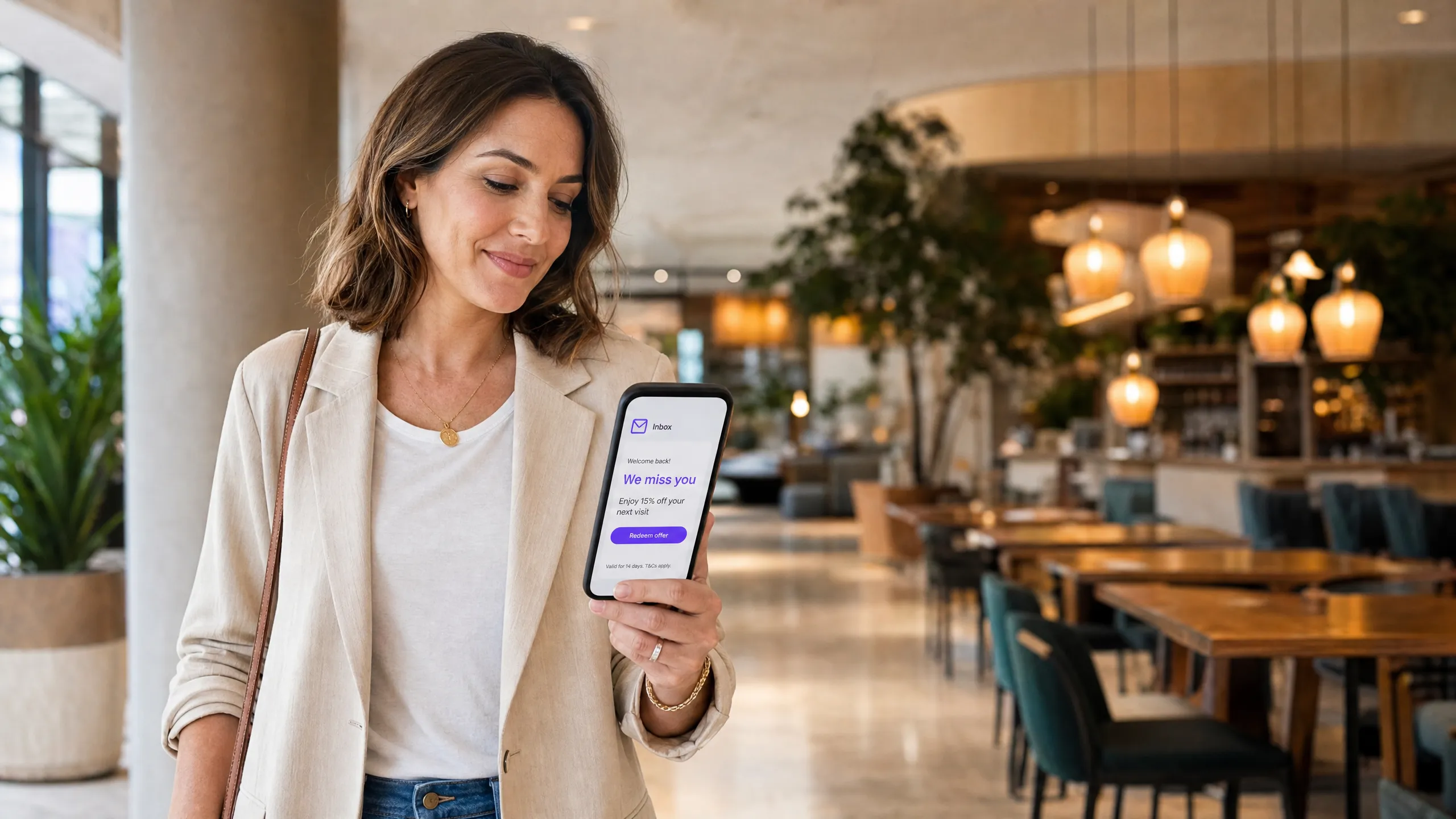
यह आपके वेन्यू के लिए क्यों महत्वपूर्ण है
वेन्यू की लाभप्रदता के लिए मेहमानों को बनाए रखना सबसे बड़ा माध्यम है। 10 करोड़ से अधिक मेहमानों के रिकॉर्ड के Olo डेटा के अनुसार, रेस्टोरेंट के राजस्व का 60% हिस्सा दोबारा आने वाले मेहमानों से आता है।[^1] नए मेहमानों से नहीं। दोबारा आने वाले मेहमान - वे लोग जो आपको पहले से जानते हैं, आपको पसंद करते हैं, और आपके यहाँ पैसे खर्च करने का विकल्प पहले ही चुन चुके हैं।
जब कोई मेहमान आना बंद कर देता है, तो अधिकांश वेन्यू के पास इस पर ध्यान देने या हस्तक्षेप करने का कोई तरीका नहीं होता है। वे इस नुकसान को स्वीकार कर लेते हैं और इसके बजाय नए मेहमानों को लाने (एक्विजिशन) पर अधिक पैसा खर्च करते हैं। यह बहुत महंगा है। शोध लगातार दिखाते हैं कि एक नए मेहमान को लाना, मौजूदा मेहमान को बनाए रखने की तुलना में पांच से 25 गुना अधिक महंगा होता है।[^2] वहीं दूसरी ओर, सामान्य ईमेल लिस्ट प्राकृतिक रूप से हर साल अपने 22% से 30% सब्सक्राइबर्स खो देती है।[^3]
कुछ न करने की लागत लगातार बढ़ती जाती है। हर वह मेहमान जो बिना किसी विन-बैक (वापस बुलाने के) प्रयास के दूर चला जाता है, वह उस खोए हुए लाइफटाइम मूल्य को दर्शाता है जिसकी भरपाई केवल एक्विजिशन खर्च से करना कठिन है। अच्छी खबर यह है: शोध बताते हैं कि 45% निष्क्रिय सब्सक्राइबर्स को लक्षित संदेशों के साथ फिर से सक्रिय किया जा सकता है।[^4] एक व्यवस्थित विन-बैक अभियान इस खोए हुए राजस्व को एक अनुमानित रिकवरी स्ट्रीम में बदल देता है।
यह गाइड इस अभियान को बनाने के व्यावहारिक तरीकों को कवर करती है - उस डेटा सोर्स से जो इसे संभव बनाता है, तीन-चरणों वाले सीक्वेंस तक, और उन मैट्रिक्स तक जो यह साबित करते हैं कि इसने काम किया।
दृष्टिकोण
अधिकांश वेन्यू विन-बैक अभियानों को जिस तरह से अपनाते हैं, उसकी मुख्य समस्या डेटा सोर्स है। Mailchimp, Klaviyo, और HubSpot जैसे पारंपरिक ईमेल मार्केटिंग टूल अभियान भेजने में उत्कृष्ट हैं। लेकिन भौतिक वेन्यू के लिए उनका एक बुनियादी अंधा क्षेत्र (ब्लाइंड स्पॉट) होता है: वे यह नहीं जानते कि कोई मेहमान वास्तव में आपके भवन में कब आता है। वे केवल यह जानते हैं कि किसी ने ईमेल खोला या किसी लिंक पर क्लिक किया।
यह एक टूटे हुए फीडबैक लूप को जन्म देता है। आप उस मेहमान को "हमें आपकी याद आ रही है" ईमेल भेज सकते हैं जो पिछले मंगलवार को आया था लेकिन उसने नकद भुगतान किया था। आप वास्तव में खो चुके मेहमान को भूल सकते हैं क्योंकि उनका ईमेल पता बदल गया है। आप एक स्थिर, मैन्युअल रूप से बनाए रखी गई सूची से काम कर रहे हैं जो हमेशा पुरानी होती है।
आधुनिक दृष्टिकोण आपके मौजूदा नेटवर्क इन्फ्रास्ट्रक्चर का उपयोग करता है। जब कोई मेहमान आपके Guest WiFi से जुड़ता है, तो वे Captive Portal के साथ इंटरैक्ट करते हैं। वे अपना ईमेल पता प्रदान करते हैं और मार्केटिंग संचार प्राप्त करने के लिए स्पष्ट, सचेत-विकल्प सहमति देते हैं। यह फर्स्ट-पार्टी डेटा है - सत्यापित, सहमत, और एक विशिष्ट तिथि और समय पर वास्तविक भौतिक यात्रा से जुड़ा हुआ।
उस क्षण से, नेटवर्क उस डिवाइस को पहचानता है। उसके बाद की हर यात्रा स्वचालित रूप से लॉग हो जाती है। कोई मैन्युअल चेक-इन नहीं। किसी लॉयल्टी ऐप की आवश्यकता नहीं। किसी POS एकीकरण की आवश्यकता नहीं। WiFi स्वयं ही विजिट-ट्रैकिंग का माध्यम है। Purple Engage इस डेटा का उपयोग पूरी विन-बैक प्रक्रिया को स्वचालित करने के लिए करता है। जब किसी गेस्ट का डिवाइस एक निश्चित अवधि - मान लें, 60 दिनों - तक आपके नेटवर्क पर दिखाई नहीं देता है, तो Purple Engage स्वचालित रूप से उस प्रोफाइल को लैप्सड सेगमेंट में ले जाता है और विन-बैक अनुक्रम को ट्रिगर करता है। यह सूची अपने आप बनती है। पहचान स्वचालित है। अभियान बिना किसी मैन्युअल हस्तक्षेप के शुरू हो जाता है।
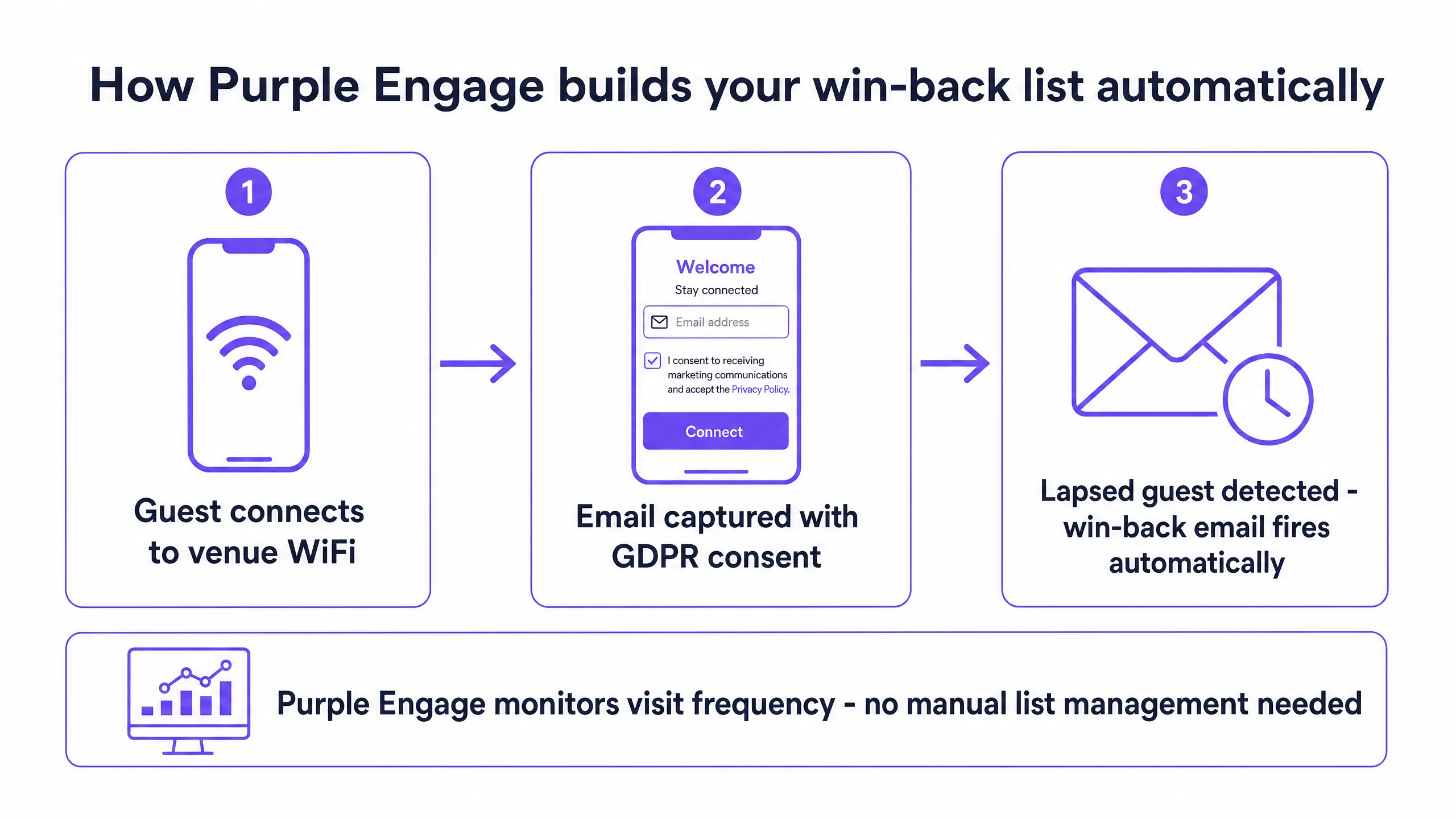
कैसे Purple Engage WiFi कनेक्शन से लेकर ट्रिगर किए गए अभियान तक, आपकी विन-बैक सूची स्वचालित रूप से बनाता है।
इसे अपने गेस्ट WiFi के साथ कैसे करें
Purple Engage आपके मौजूदा हार्डवेयर - Cisco Meraki, HPE Aruba, Ruckus, Juniper Mist, Ubiquiti UniFi, Cambium, Extreme, या Fortinet - से क्लाउड ओवरले के रूप में जुड़ता है। किसी हार्डवेयर को बदलने की आवश्यकता नहीं है।
सेटअप में चार चरण हैं।
चरण 1: Captive Portal कॉन्फ़िगर करें। पोर्टल गेस्ट का ईमेल पता और एक स्पष्ट GDPR-अनुपालन वाला मार्केटिंग सहमति चेकबॉक्स कैप्चर करता है। वह चेकबॉक्स पहले से टिक नहीं होना चाहिए। GDPR के तहत, सहमति एक जानबूझकर की गई, सकारात्मक कार्रवाई होनी चाहिए। Purple Engage बॉक्स से बाहर अनुपालन वाले सहमति प्रवाह प्रदान करता है, जिसे प्रति क्षेत्र और प्रति स्थान कॉन्फ़िगर किया जा सकता है।
चरण 2: ईमेल सत्यापन सक्षम करें। नेटवर्क एक्सेस देने से पहले Purple Verify वास्तविक समय में ईमेल पते की जांच करता है। सत्यापन के बिना, कैप्चर किए गए लगभग 17% पते अमान्य होने की आशंका रहती है। Verify के साथ, डेटाबेस की सटीकता में 83% का सुधार होता है (Purple आंतरिक डेटा)। एक साफ सूची अच्छी वितरण क्षमता और प्रेषक की प्रतिष्ठा की नींव है।
चरण 3: अपनी लैप्सड सीमा निर्धारित करें। यह स्थान के प्रकार के आधार पर भिन्न होता है। कॉफी शॉप या फास्ट-कैजुअल रेस्तरां के लिए, 30 दिन उपयुक्त हैं - ये उच्च-आवृत्ति वाले स्थान हैं जहां अनुपस्थिति का अर्थ जल्दी समझ में आता है। एक डेस्टिनेशन रेस्तरां या बार के लिए, 60 दिन। एक होटल के लिए, आपके सामान्य बुकिंग चक्र के आधार पर, 90 से 180 दिन।
चरण 4: अपने ईमेल प्लेटफॉर्म से जुड़ें। Purple Engage लैप्सड सेगमेंट को आपके मौजूदा ईमेल टूल - Mailchimp, Klaviyo, HubSpot, Braze, Iterable, या वेबहुक समर्थन वाले किसी भी प्लेटफॉर्म के साथ सिंक करता है। आपका मौजूदा टूल भेजने का काम संभालता है। Purple डेटा, सेगमेंटेशन और ट्रिगर को संभालता है। उन सेगमेंट को व्यवस्थित करने के तरीके के बारे में अधिक जानने के लिए, स्थानों के लिए ईमेल सेगमेंटेशन: एक व्यावहारिक गाइड पर हमारी गाइड पढ़ें।
क्या भेजें, और कब
प्रभावी विन-बैक अभियान चरणों वाले दृष्टिकोण का उपयोग करते हैं। प्रत्येक चरण का एक अलग लहजा, एक अलग ऑफ़र और एक अलग लक्ष्य होता है।
| चरण | समय | लहजा | ऑफ़र | लक्ष्य |
|---|---|---|---|---|
| 1: द नज | 30-60 दिन | सूचनात्मक | कोई छूट नहीं - नई सामग्री | प्रासंगिकता को फिर से स्थापित करना |
| 2: डायरेक्ट विन-बैक | 60-90 दिन | व्यक्तिगत | सार्थक प्रोत्साहन | वापसी विजिट को बढ़ावा देना |
| 3: अंतिम मौका | 90-120 दिन | तत्काल | सबसे अच्छा ऑफ़र जो आप दे सकते हैं | सनसेट से पहले आखिरी प्रयास |
चरण 1: हल्का सा याद दिलाना (30-60 दिन)
इस चरण में, मेहमान की अनुपस्थिति का ज़िक्र न करें। मेहमान को अपने स्थान (venue) के महत्व की याद दिलाएं। उन्हें दिखाएं कि क्या नया है - एक मौसमी मेनू, कोई आगामी कार्यक्रम, या कोई नई उत्पाद श्रृंखला। इसका उद्देश्य बिना किसी दबाव के अपनी प्रासंगिकता को फिर से स्थापित करना है। एक अच्छी विषय पंक्ति (subject line): "[Venue Name] पर कुछ नया आपका इंतज़ार कर रहा है।"
चरण 2: सीधे वापस जीतना (60-90 दिन)
अब अनुपस्थिति को स्वीकार करें। एक स्पष्ट और ईमानदार विषय पंक्ति का उपयोग करें। यहाँ दिया जाने वाला ऑफर बहुत मायने रखता है। रेस्तरां और बार के लिए, एक मुफ्त ऐपेटाइज़र या मानार्थ (complimentary) पेय अक्सर प्रतिशत छूट से बेहतर प्रदर्शन करता है - एक मुफ्त चीज़ एक सच्चे उपहार की तरह लगती है और वापसी की बाधा को कम करती है। रिटेल के लिए, बिना किसी न्यूनतम खर्च के मुफ्त डिलीवरी का ऑफर या सात से 14 दिनों की समाप्ति अवधि वाली 20% की छूट अच्छा काम करती है। होटलों के लिए, कमरे की कीमत कम करने के बजाय एक वैल्यू-ऐड पैकेज (मानार्थ देर से चेक-आउट, स्वागत पेय, या उपलब्धता के आधार पर रूम अपग्रेड) की पेशकश करें, ताकि आपकी औसत दैनिक दर सुरक्षित रहे। एक प्रभावी विषय पंक्ति: "काफ़ी समय हो गया है, [First Name] - हमें आपकी कमी महसूस हो रही थी, इसलिए आपके लिए कुछ ख़ास है।"
चरण 3: अंतिम अवसर (90-120 दिन)
यह आपका सबसे अच्छा ऑफर है। इसे असरदार बनाएं। पारदर्शी रहें: मेहमान को बताएं कि यदि वे प्रतिक्रिया नहीं देते हैं, तो आप उन्हें ईमेल भेजना बंद कर देंगे। यह एक वास्तविक तात्कालिकता (urgency) पैदा करता है और निष्क्रिय संपर्कों को हटाकर एक प्रेषक के रूप में आपकी प्रतिष्ठा को सुरक्षित रखता है। विषय पंक्ति: "अंतिम अवसर, [First Name] - हम आपसे संपर्क करने का प्रयास बंद करने वाले हैं।"
चरण 3 के बाद, सनसेट पॉलिसी (sunset policy) लागू करें। प्रतिक्रिया न देने वालों को सक्रिय सूची से हटा दें। यह कोई विफलता नहीं है - बल्कि यह सूची को साफ़-सुथरा रखने का एक अच्छा तरीका है। निष्क्रिय ईमेल पतों पर ईमेल भेजने से आपके द्वारा भेजे जाने वाले हर अभियान की वितरण क्षमता (deliverability) को नुकसान पहुंचता है।
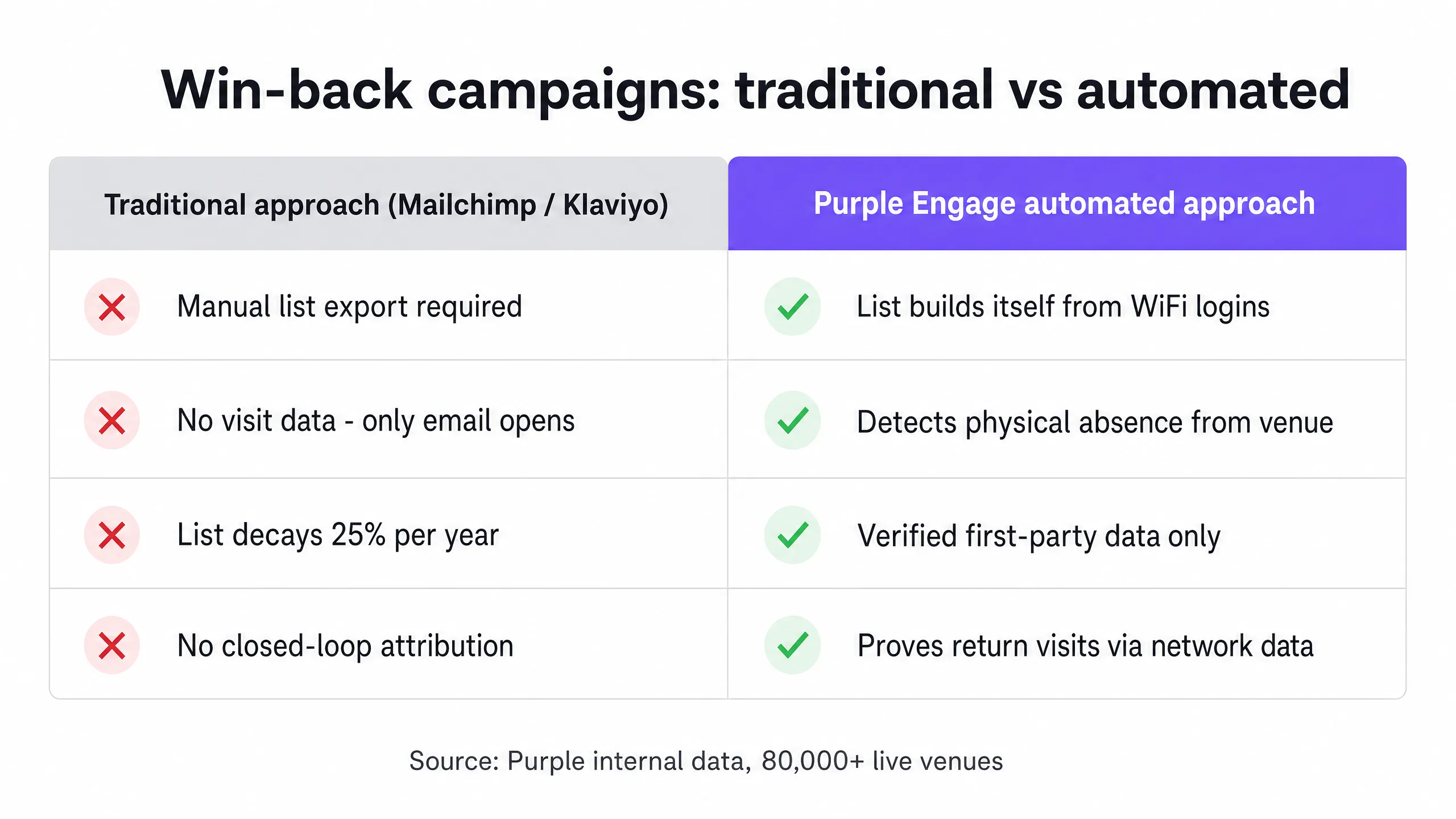
पारंपरिक ग्राहक-वापसी दृष्टिकोण मैन्युअल सूची प्रबंधन और केवल-ईमेल संकेतों पर निर्भर करते हैं। Purple Engage सत्यापित WiFi विज़िट डेटा का उपयोग करके सूची और पहचान दोनों को स्वचालित करता है।
यह मापना कि क्या काम कर रहा है
सफलता को केवल ईमेल ओपन रेट (open rates) से न मापें। Apple की मेल प्राइवेसी प्रोटेक्शन ने ओपन रेट्स को अविश्वसनीय बना दिया है - एक ईमेल तब भी "ओपन" दर्ज हो सकता है जब उसे वास्तव में कभी पढ़ा ही न गया हो। Klaviyo के अपने 2026 बेंचमार्क भी इस विसंगति को दर्शाते हैं।[^5]
किसी स्थान के लिए ग्राहक-वापसी अभियान का सबसे महत्वपूर्ण पैमाना मेहमानों का शारीरिक रूप से वापस आना है। चूंकि Purple Engage, WiFi नेटवर्क के माध्यम से उपस्थिति को ट्रैक करता है, इसलिए आप सटीक योगदान को माप सकते हैं: आपको पता होता है कि ईमेल कब भेजा गया था, और आपको ठीक-ठीक पता होता है कि मेहमान कब वापस आया और उसने नेटवर्क से कनेक्ट किया। यह क्लोज्ड-लूप एट्रिब्यूशन प्रति सेंड उत्पन्न होने वाले राजस्व को साबित करता है।
ट्रैक किए जाने वाले प्रमुख मेट्रिक्स हैं:
- रिटर्न विज़िट दर (Return visit rate): उन निष्क्रिय मेहमानों का प्रतिशत जो वापसी ईमेल प्राप्त करने के 30 दिनों के भीतर शारीरिक रूप से वापस आए।
- प्रति सेंड राजस्व (Revenue per send): वापस आने वाले मेहमानों से प्राप्त कुल अतिरिक्त राजस्व को भेजे गए ईमेल की संख्या से विभाजित करना।
- पुनः सक्रियता दर (Reactivation rate): उन समाप्त हो चुके मेहमानों का प्रतिशत जो अभियान के बाद कम से कम एक लेनदेन पूरा करते हैं।
- सूची का स्वास्थ्य (List health): सनसेट पॉलिसी के परिणामस्वरूप बाउंस दर और अनसब्सक्राइब दर में कमी।
उद्योग के बेंचमार्क बताते हैं कि अच्छी तरह से निष्पादित किए गए विन-बैक अभियान 8% से 15% निष्क्रिय संपर्कों को पुनः प्राप्त कर लेते हैं।[^6] 10,000 समाप्त हो चुके मेहमानों और £25 के औसत लेनदेन मूल्य वाले एक स्थल के लिए, उस सूची के 10% को प्रत्येक एक विज़िट पर पुनः प्राप्त करने से एक एकल अभियान चक्र से £25,000 का अतिरिक्त राजस्व उत्पन्न होता है।
कहाँ से शुरू करें
अपना पहला विन-बैक अभियान लाइव करने के लिए यह क्रमबद्ध चेकलिस्ट दी गई है।
- पुष्टि करें कि आपका हार्डवेयर समर्थित सूची (Cisco Meraki, HPE Aruba, Ruckus, Juniper Mist, Ubiquiti UniFi, Cambium, Extreme, या Fortinet) में है।
- Captive Portal को सक्रिय करें और इसे स्पष्ट GDPR सहमति के साथ ईमेल कैप्चर करने के लिए कॉन्फ़िगर करें। कोई भी बॉक्स पहले से टिक नहीं होना चाहिए।
- पहले दिन से ही डेटाबेस की सटीकता सुनिश्चित करने के लिए Purple Verify को सक्षम करें।
- Purple Engage में अपनी लैप्स अवधि की सीमा निर्धारित करें (उच्च आवृत्ति वाले स्थलों के लिए 30 दिन, गंतव्य स्थलों के लिए 60 से 90 दिन)।
- बढ़ते हुए प्रस्तावों और चरण 3 पर एक स्पष्ट सनसेट संदेश के साथ तीन चरणों वाले ईमेल अनुक्रम का मसौदा तैयार करें।
- नेटिव कनेक्टर या वेबहुक के माध्यम से Purple Engage को अपने ईमेल प्लेटफॉर्म से कनेक्ट करें।
- स्वचालन को सक्रिय करें और पहले महीने के लिए साप्ताहिक रूप से Purple डैशबोर्ड में भौतिक वापसी विज़िट की निगरानी करें।
[^1]: Olo, "60% of Restaurant Sales Are From Repeat Guests," नवंबर 2024, 100 मिलियन+ अतिथि रिकॉर्ड के आधार पर। [^2]: Invesp, "Customer Acquisition vs Retention Costs," 2026. [^3]: Emercury, "8 Strategies for Re-Engaging Inactive Subscribers," 2026. [^4]: GrowthWay Advertising, "The Best Re-Engagement Email Templates," 2025. [^5]: Klaviyo, "Email Marketing Benchmarks 2026," फरवरी 2026। [^6]: Chase Dimond, "Re-Engagement Email Examples," 2025, प्रबंधित ईकॉमर्स ईमेल अभियानों में $200M+ के आधार पर।