
Building a restaurant loyalty program on email and WiFi
This guide details how to build a restaurant loyalty programme using guest WiFi and email, without requiring an app or punch cards. It explains how to capture first-party data automatically, segment guests by visit frequency, and send targeted campaigns that drive measurable return visits and revenue.
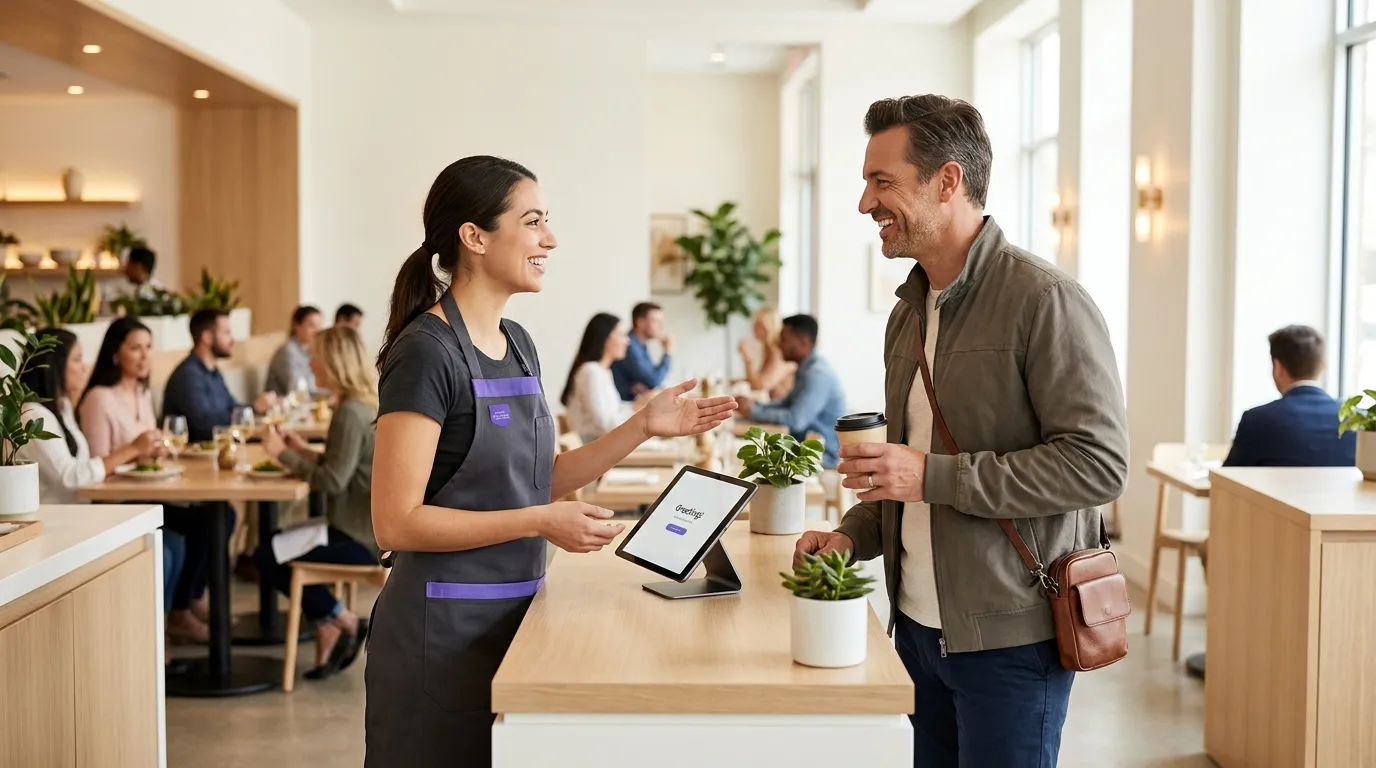
आपके वेन्यू के लिए यह क्यों महत्वपूर्ण है
एक औसत रेस्टोरेंट अपनी पहली विज़िट के बाद लगभग 60% मेहमानों को खो देता है। वे आते हैं, भोजन करते हैं, और बिना किसी मार्केटिंग लिस्ट में शामिल हुए चले जाते हैं। आपके पास उन तक पहुँचने का कोई तरीका नहीं होता। वे चले जाते हैं।
इसकी तुलना उस मेहमान से करें जो आपकी ईमेल लिस्ट में है। ईमेल मार्केटिंग लगातार उच्च रिटर्न देती है, जिसमें इंडस्ट्री बेंचमार्क दिखाते हैं कि खर्च किए गए प्रत्येक एक पाउंड के बदले 36 पाउंड तक का रेवेन्यू मिलता है। अधिकांश ऑपरेटरों के लिए चुनौती ईमेल प्लेटफॉर्म ढूंढना नहीं है। Mailchimp, Klaviyo, और HubSpot सक्षम टूल्स हैं। चुनौती लिस्ट बनाना है। आपको यह जानने की आवश्यकता है कि किसने विज़िट किया, उन्होंने कब विज़िट किया, और उन तक दोबारा कैसे पहुँचा जाए।
यही वह अंतर है जिसे गेस्ट WiFi पूरा करता है। जब कोई मेहमान आपके WiFi से कनेक्ट होता है, तो वे अपना ईमेल पता दर्ज करते हैं और मार्केटिंग के लिए एक स्पष्ट ऑप्ट-इन देखते हैं। वे बॉक्स को टिक करने का एक सचेत विकल्प चुनते हैं। यह आपको GDPR-compliant, सत्यापित, फर्स्ट-पार्टी डेटा प्रदान करता है। यह आपका है, किसी थर्ड-पार्टी डिलीवरी प्लेटफॉर्म का नहीं। यह एक ऐसे रेस्टोरेंट लॉयल्टी प्रोग्राम की नींव है जो खुद-ब-खुद बनता है।
दृष्टिकोण
WiFi पर लॉयल्टी प्रोग्राम बनाने के लिए किसी ऐप डाउनलोड और किसी फिजिकल पंच कार्ड की आवश्यकता नहीं होती है। मेहमान नेटवर्क से कनेक्ट होता है, और सिस्टम बाकी काम संभाल लेता है।
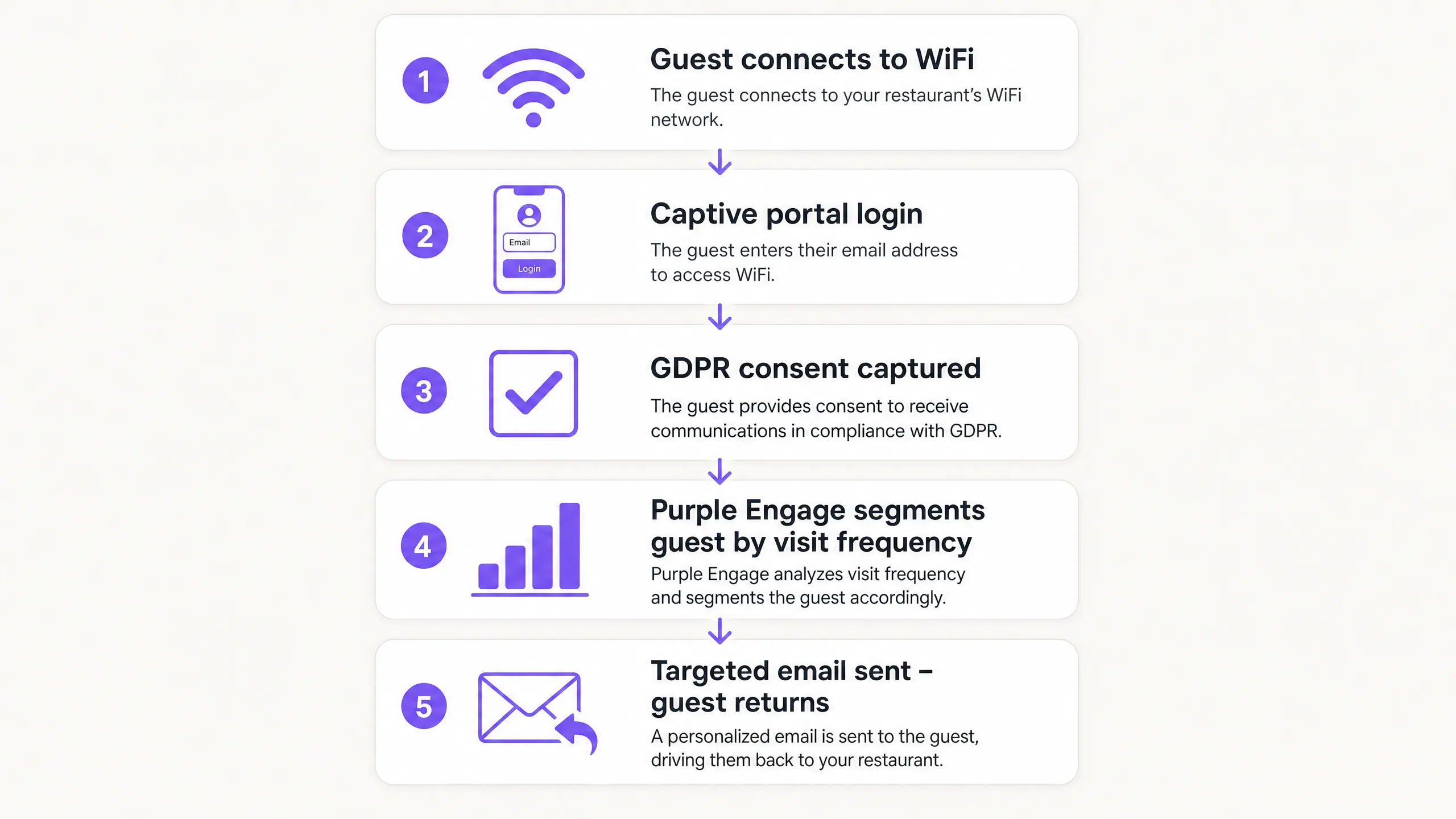
सबसे पहले, मेहमान एक ब्रांडेड Captive Portal के माध्यम से आपके गेस्ट WiFi से कनेक्ट होता है। वे अपना ईमेल पता दर्ज करते हैं और GDPR सहमति प्रदान करते हैं। वे सेकंडों में ऑनलाइन हो जाते हैं।
दूसरा, Purple उस ईमेल पते को तारीख, समय और वेन्यू लोकेशन के साथ कैप्चर करता है। जब मेहमान अगले सप्ताह वापस आता है, तो Purple उसी प्रोफाइल के खिलाफ उस दूसरी विज़िट को रिकॉर्ड करता है। समय के साथ, आप एक सटीक तस्वीर बनाते हैं कि आपके नियमित मेहमान कौन हैं और कौन 90 दिनों से वापस नहीं आया है।
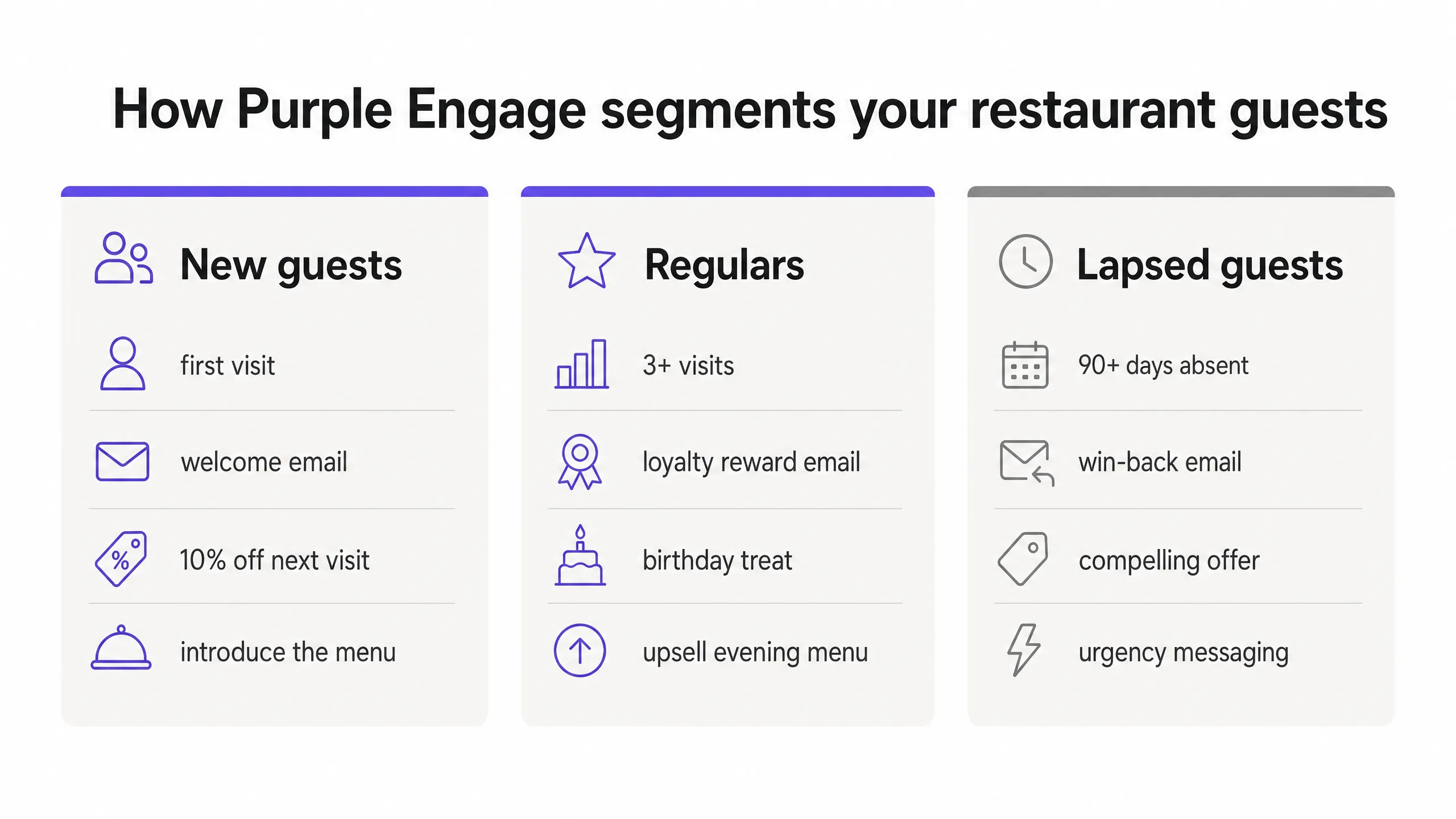
तीसरा, Purple Engage इस विज़िट डेटा का उपयोग आपके दर्शकों को स्वचालित रूप से सेगमेंट करने के लिए करता है। आपको संपर्कों को मैन्युअल रूप से टैग करने की आवश्यकता नहीं है। प्लेटफॉर्म वास्तविक विज़िट फ्रीक्वेंसी के आधार पर नए मेहमानों, नियमित मेहमानों और छूटे हुए मेहमानों की पहचान करता है।
अंत में, आप प्रत्येक सेगमेंट को लक्षित ईमेल भेजते हैं। नए मेहमानों को एक स्वागत ईमेल मिलता है। नियमित मेहमानों को एक इनाम मिलता है। छूटे हुए मेहमानों को वापस लाने के लिए एक विन-बैक ऑफर मिलता है। प्रत्येक ईमेल प्रासंगिक होता है क्योंकि यह वास्तविक व्यवहार पर आधारित होता है। Mailchimp आपका कैंपेन भेजेगा, लेकिन उसे यह नहीं पता कि पिछले मंगलवार को किसने विज़िट किया था। Purple को पता है।
इसे अपने गेस्ट WiFi के साथ कैसे करें
इस दृष्टिकोण को लागू करने के लिए, आपको सबसे पहले गेस्ट WiFi की आवश्यकता होगी जो एक Captive Portal के माध्यम से रूट होता हो। Purple सीधे Cisco Meraki, HPE Aruba, Ruckus, Juniper Mist, Ubiquiti UniFi, Cambium, Extreme और Fortinet हार्डवेयर के साथ एकीकृत होता है। यदि आप इनमें से किसी एक वेंडर का उपयोग करते हैं, तो यह संभवतः संगत है। Purple एक क्लाउड ओवरले के रूप में काम करता है, जिसका अर्थ है कि आपको अपने मौजूदा हार्डवेयर को बदलने की आवश्यकता नहीं है।
इसके बाद, आप अपना Captive Portal कॉन्फ़िगर करते हैं। डिज़ाइन को सरल रखें। अपना लोगो, एक संक्षिप्त स्वागत संदेश, ईमेल फ़ील्ड और एक स्पष्ट GDPR सहमति चेकबॉक्स शामिल करें। आप क्या भेजेंगे, इसका वर्णन करने के लिए सरल भाषा का उपयोग करें। सहमति को जटिल कानूनी पाठ में न छिपाएं। जो मेहमान यह समझते हैं कि वे किस चीज़ के लिए साइन अप कर रहे हैं, वे बाद में आपके ईमेल के साथ अधिक जुड़ते हैं।
अंत में, Purple Engage को अपनी ईमेल रणनीति से जोड़ें। Purple सेगमेंटेशन और ऑटोमेशन ट्रिगर्स को संभालता है। आप ईमेल लिखते हैं या प्रदान किए गए टेम्प्लेट का उपयोग करते हैं।
इस डेटा को कैप्चर करने के तरीके के बारे में अधिक गहराई से जानने के लिए, Guest WiFi पर हमारी गाइड की समीक्षा करें।
क्या भेजें, और कब
ऑपरेटरों द्वारा की जाने वाली सबसे आम गलती स्वागत ईमेल की उपेक्षा करना है। एक मेहमान मंगलवार की शाम को आपके WiFi से जुड़ता है। यदि आपका स्वागत ईमेल तीन दिन बाद आता है, तो वह अवसर निकल चुका होता है। अपना स्वागत ईमेल पहले कनेक्शन के एक घंटे के भीतर भेजने के लिए सेट करें। यह वह समय होता है जब उनकी यात्रा ताज़ा होती है और जब "आने के लिए धन्यवाद, आपके अगले भोजन पर 10% की छूट है" जैसा संदेश अधिकतम प्रभाव डालता है।
अत्यधिक ईमेल भेजने से बचें। यदि आप अपनी पूरी सूची में साप्ताहिक ब्रॉडकास्ट भेजते हैं, तो ओपन रेट गिर जाएंगे और अनसब्सक्राइब बढ़ जाएंगे। कठोरता से सेगमेंट करें। एक नियमित ग्राहक जो हर हफ्ते आता है, उसे वापस बुलाने वाले (win-back) ईमेल की आवश्यकता नहीं होती है। संदेश को व्यवहार से मिलाएं।
Purple द्वारा प्रदान किए जाने वाले डेटा का उपयोग करें। विज़िट फ्रीक्वेंसी, ड्वेल टाइम और रिपीट विज़िट रेट देखें। विज़िट फ्रीक्वेंसी के आधार पर अपने शीर्ष 20% मेहमानों की पहचान करें और उनके साथ अलग व्यवहार करें। उन्हें नए मेनू तक जल्दी पहुंच या जन्मदिन का उपहार दें। इस तरह आप केवल एक मेलिंग सूची नहीं, बल्कि एक लॉयल्टी प्रोग्राम बनाते हैं।
क्या काम कर रहा है, इसे मापना
केवल ओपन रेट और क्लिक-थ्रू रेट पर भरोसा न करें। ये केवल प्रॉक्सी मेट्रिक्स हैं। एक रेस्तरां लॉयल्टी प्रोग्राम का वास्तविक पैमाना रिटर्न विज़िट रेट और प्रति सेंड उत्पन्न राजस्व है।
Harrods ने Purple Engage के माध्यम से इस दृष्टिकोण को चलाया और निवेश पर 57 गुना रिटर्न (ROI) प्राप्त किया। यानी प्रोग्राम पर खर्च किए गए प्रत्येक पाउंड के बदले 57 पाउंड वापस मिले। हालांकि Harrods एक उच्च-फुटफॉल वाला लक्जरी रिटेल वातावरण है, लेकिन 60-सीट वाले रेस्तरां या 12 स्थानों वाले पब समूह के लिए भी इसकी कार्यप्रणाली बिल्कुल समान है। सूची अपने आप बनती है, सेगमेंट स्वचालित रूप से अपडेट होते हैं, और ईमेल शेड्यूल के अनुसार बाहर जाते हैं।
हितधारकों (stakeholders) के सामने इन मेट्रिक्स को कैसे प्रस्तुत किया जाए, यह समझने के लिए हमारी गाइड पढ़ें: Proving marketing ROI to venue owners with WiFi data (या इसका स्पैनिश संस्करण: Cómo demostrar el ROI de marketing a los propietarios de establecimientos con datos de WiFi)।
कहाँ से शुरुआत करें
- Purple के साथ हार्डवेयर अनुकूलता (compatibility) की पुष्टि करने के लिए अपने वर्तमान WiFi सेटअप का ऑडिट करें।
- स्पष्ट, GDPR-अनुरूप सहमति प्रवाह (consent flow) के साथ अपना Captive Portal कॉन्फ़िगर करें।
- पहली विज़िट के एक घंटे के भीतर भेजने के लिए एक स्वचालित स्वागत ईमेल सेट करें।
- तीन विज़िट पूरी करने वाले मेहमानों के लिए ट्रिगर होने वाला एक रिवॉर्ड ईमेल बनाएं।
- उन मेहमानों के लिए एक विन-बैक (win-back) ईमेल बनाएं जिन्होंने 90 दिनों से विज़िट नहीं की है।
- 60 दिनों के बाद रिटर्न विज़िट दरों की समीक्षा करें और प्रदर्शन के आधार पर ऑफ़र को समायोजित करें।
इस रणनीति को लागू करने के बारे में अधिक जानकारी के लिए हमारा ब्रीफिंग पॉडकास्ट सुनें: